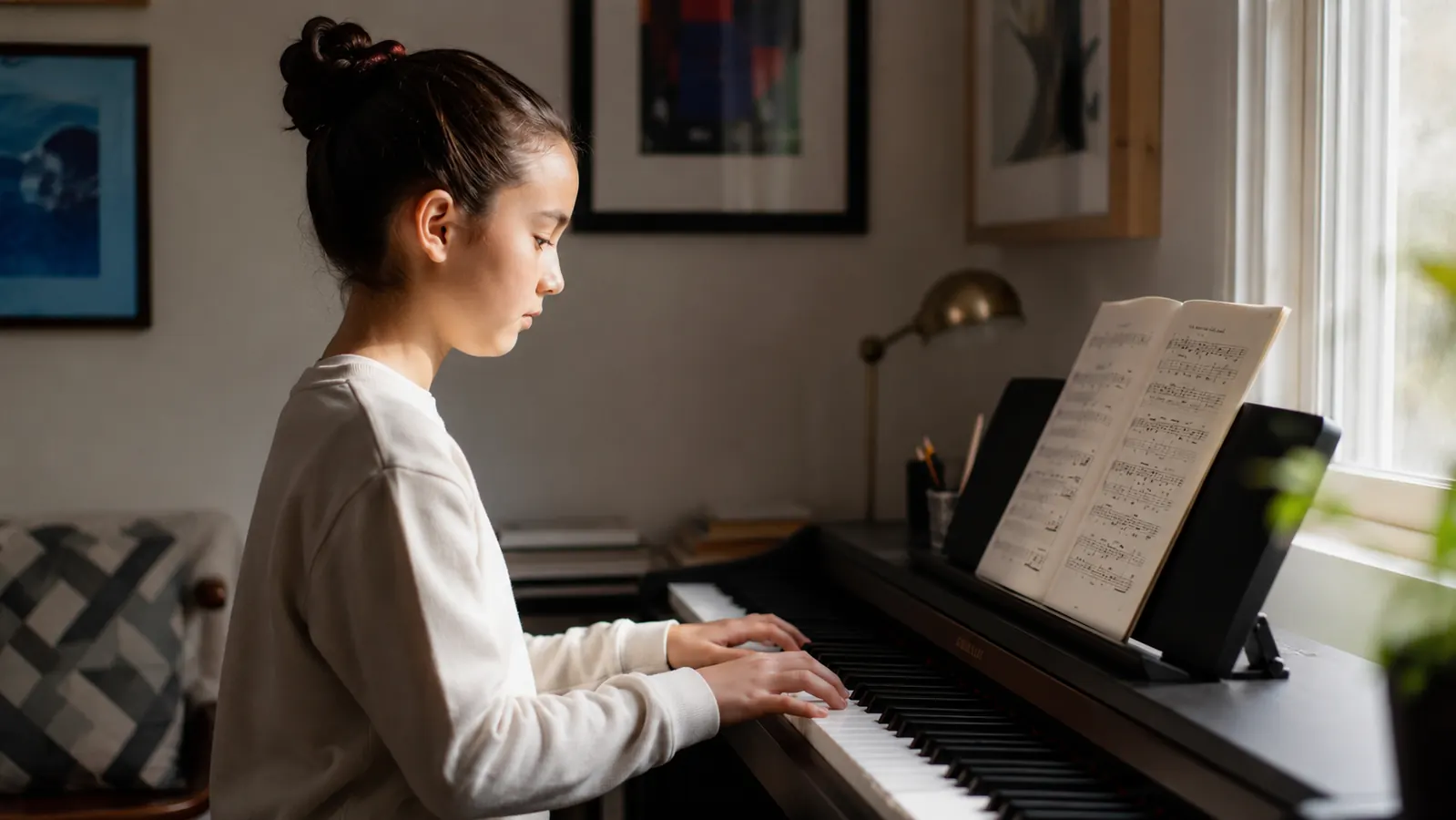
Every week a parent slides a keyboard onto my teaching desk and asks the same question before their kid plays a single note: is this one okay? Most of the time the answer is written straight into the keys. If they barely resist a finger, if they spring back like a toy, then no, this one is going to teach your child the wrong thing from the very first lesson. The feel of the key is the first lesson, and it happens before any music is played at all.
For the families who ask me to recommend a starter, the Alesis Recital is the 88-key I point to most, and its semi-weighted action is the reason. It sits right between the weightless spring keys of a toy keyboard and the full hammer action of a concert-style digital piano, which is exactly where a beginning student belongs. The sound presets and lighting features on the box mean nothing compared to how the instrument actually feels under ten small fingers. Here are the ten reasons the weight of a key matters more than everything else on the spec sheet.
The 88-Key Semi-Weighted Starter I Give Every New Beginner
Most of my first-year students practice on an Alesis Recital. The semi-weighted keys give their fingers something real to press against from day one, and the full 88 keys mean their method book never runs out of range.
Amazon Check Today's Price on Amazon →Weighted Keys Build Finger Strength Before the Music Starts
A springy key takes no effort to press, so a beginner's hand never has to work, and the fingers collapse and slap instead of press. A key that resists you, even gently, asks the small muscles of the hand to do the job they will need for the rest of a lifetime at the piano. I watch new students make this connection within weeks: their hands stop looking like little claws and start looking like piano hands. After a few months on semi-weighted keys, they simply have stronger, steadier hands.
You Can Feel Loud and Soft, Not Just Hear It
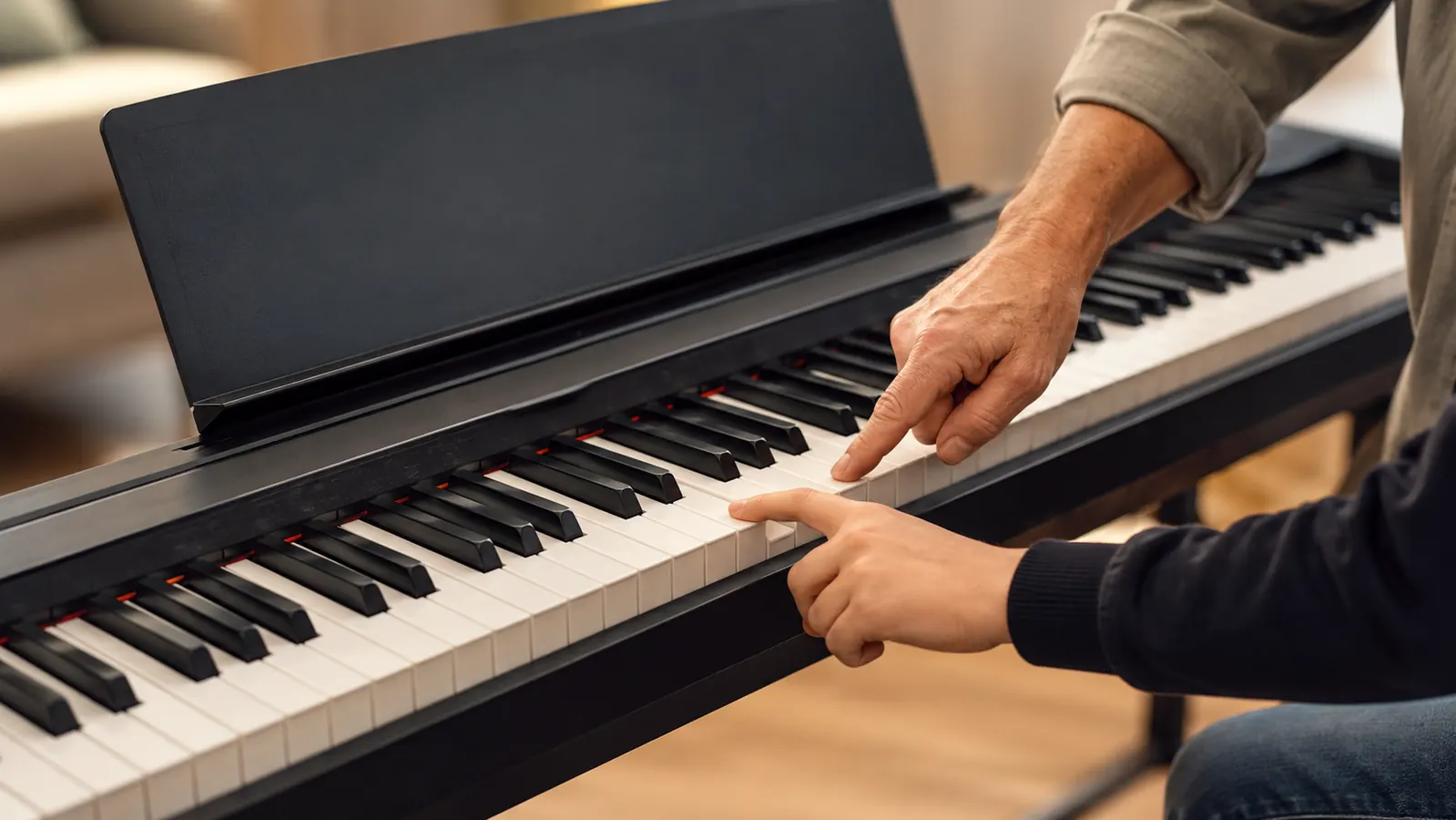
Dynamics are the first musical idea a piano teacher introduces, playing a note hard versus playing it gently. On a weightless key there is almost no difference in the feel, so the student has to learn it by ear alone. On a weighted key the resistance changes as you press deeper, which gives the hand a physical map of loud and soft. That feedback teaches control faster than any explanation I can give, and it is the reason my quietest students are almost always the ones on weighted keys.
The Key Teaches Correct Hand Position on Its Own
Flat fingers and collapsed knuckles happen because nothing stops a finger that comes down wrong. A properly weighted key rewards a curved finger with an even, controlled press and punishes a flat one with a thin, weak tone. I still correct posture by hand, but the instrument itself becomes an ally in the fight. A beginner whose keys give this feedback from day one forms good hand shape without it ever feeling like nagging.
Practicing on Weighted Keys Carries Straight to an Acoustic
One day your student will sit at a real upright at school or a friend's house, and the whole instrument will feel heavier. If they learned on weightless keys, that moment is a shock and their technique falls apart in a single recital. If they have been practicing on weighted keys, the acoustic just feels familiar, slightly firmer, and their hands already know what to do. The transfer is so smooth that parents are always surprised how little adjustment it takes.
Connected Playing Depends on Key Resistance
Legato, playing one note that flows into the next, is the difference between a beginner sound and a musician sound. It is controlled by the release, how the key comes back up as your finger lifts. A springy key pops back up on its own schedule, so the note is already ending before the student decided to let it go. A weighted key returns at a pace your finger can feel, which is how students learn to shape a phrase instead of poking out separate notes.
Weighted Keys Keep Beginners From Quitting
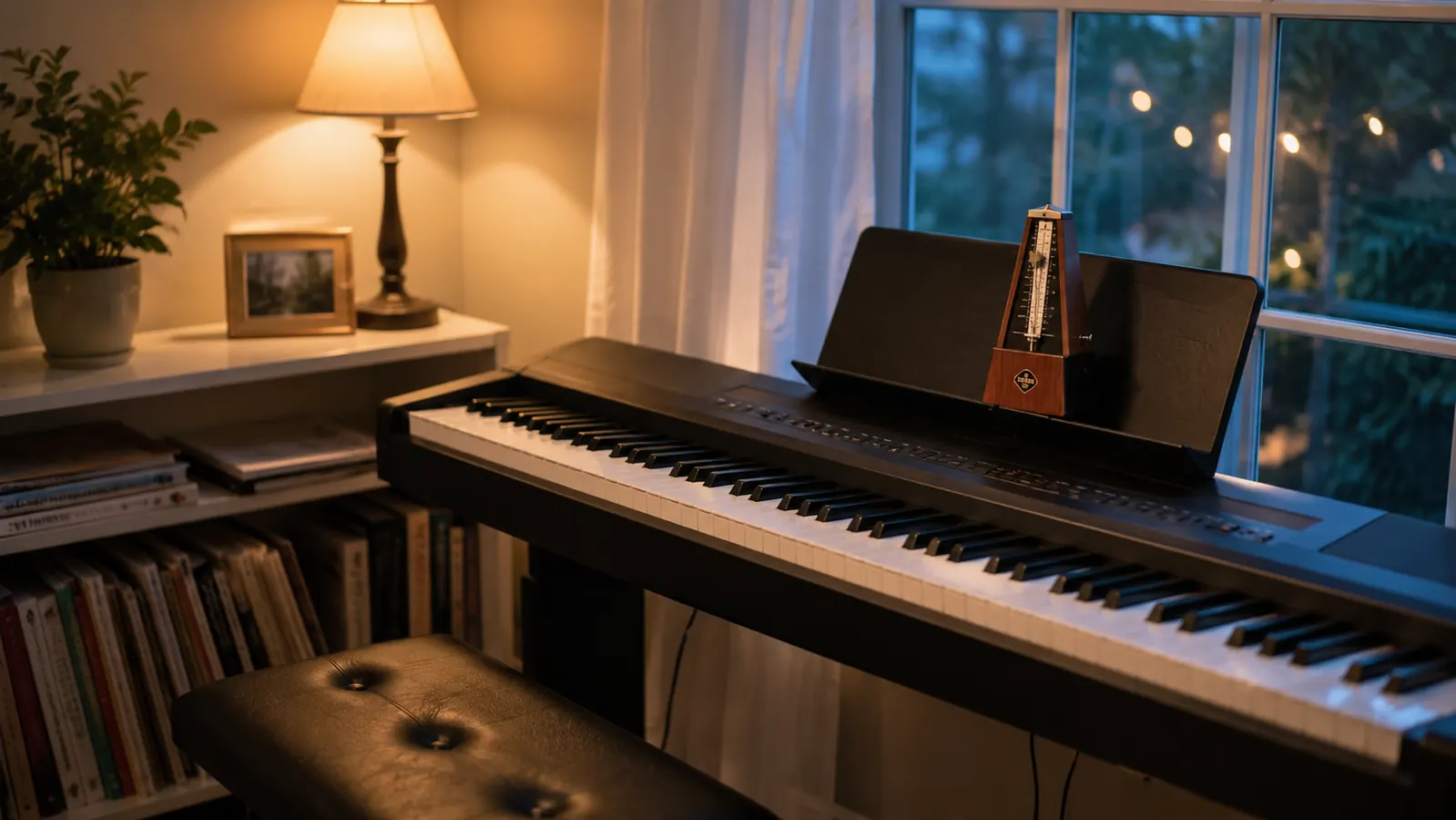
A keyboard that feels like a toy sounds like a toy, and kids notice within a week. Fewer of my students abandon practice when the instrument feels substantial under their hands, because pressing a weighted key is satisfying in a way a springy one is not. The motivation problem is partly a feel problem in disguise. When an instrument answers your touch, it feels worth coming back to, and that is half the battle with a beginner.
Evenness and Rhythm Start in the Fingers
With zero resistance under the keys, notes fire at whatever velocity the finger happens to land, so scales come out bumpy and rhythm slips wander all over the place. Weighted keys force the same commitment on every press, and I can hear students' timing tighten within weeks of switching. The metronome does the counting, but the fingers learn the evenness. A scale that comes out level is a scale played by a hand that can feel each key.
88 Keys Means Real Sheet Music Fits
Beginner method books stop at the edge of most small keyboards, and then the student has to jump an octave and fake it. An 88-key instrument covers the full range of the sheet music they will actually be handed, from the lowest bass line to the highest melody. The Alesis Recital's full 88 semi-weighted keys are a big reason I recommend it over cheaper keyboards with 61 or 76 keys. They never have to stop and wonder whether the note exists on their board.
Teachers Can Actually Assess Your Kid's Technique
When I listen to a student who practices on a weightless keyboard, I cannot tell whether a weak phrase is a listening problem, a hand problem, or a keyboard problem, because the instrument gives me no information. On weighted keys the mistakes become honest, which means they become fixable. If your child is taking lessons, the teacher needs an instrument that answers back accurately. Otherwise I am guessing, and a guess is not a diagnosis.
One Semi-Weighted Piano Can Carry a Student for Years
The honest truth is that a fully weighted hammer action is the next step up, and it costs more. But for a first instrument, semi-weighted is the sensible place to start, because it fixes every problem above without spending on a concert action before you know whether your child will stick with lessons. Most of my students play for two or three years on the Alesis Recital before upgrading is worth it, and several of them never bother. That is the case for starting here and letting the student's own progress decide what comes next.
What I'd Skip
Skip any keyboard with fewer than 88 keys if the child is taking lessons, and skip anything with springy, weightless keys no matter how many built-in sounds it has. I would also skip the other direction, spending extra on a fully weighted hammer action before anyone knows whether the lessons will last. And skip the gimmick features, the demo buttons and lighting modes will entertain for an afternoon and distract for a year. A first student needs a good action, the full range, and a sustain pedal, and very little else.
A kid who learns dynamics on a weightless key is learning a fake version of the instrument, and I can hear it the first time they touch an acoustic piano.
The Semi-Weighted 88-Key I Hand Every New Student
The Alesis Recital is the keyboard that sits in my studio for first-year students, and the same semi-weighted action I teach on is waiting at today's price on Amazon.
Amazon Check Today's Price on Amazon →