
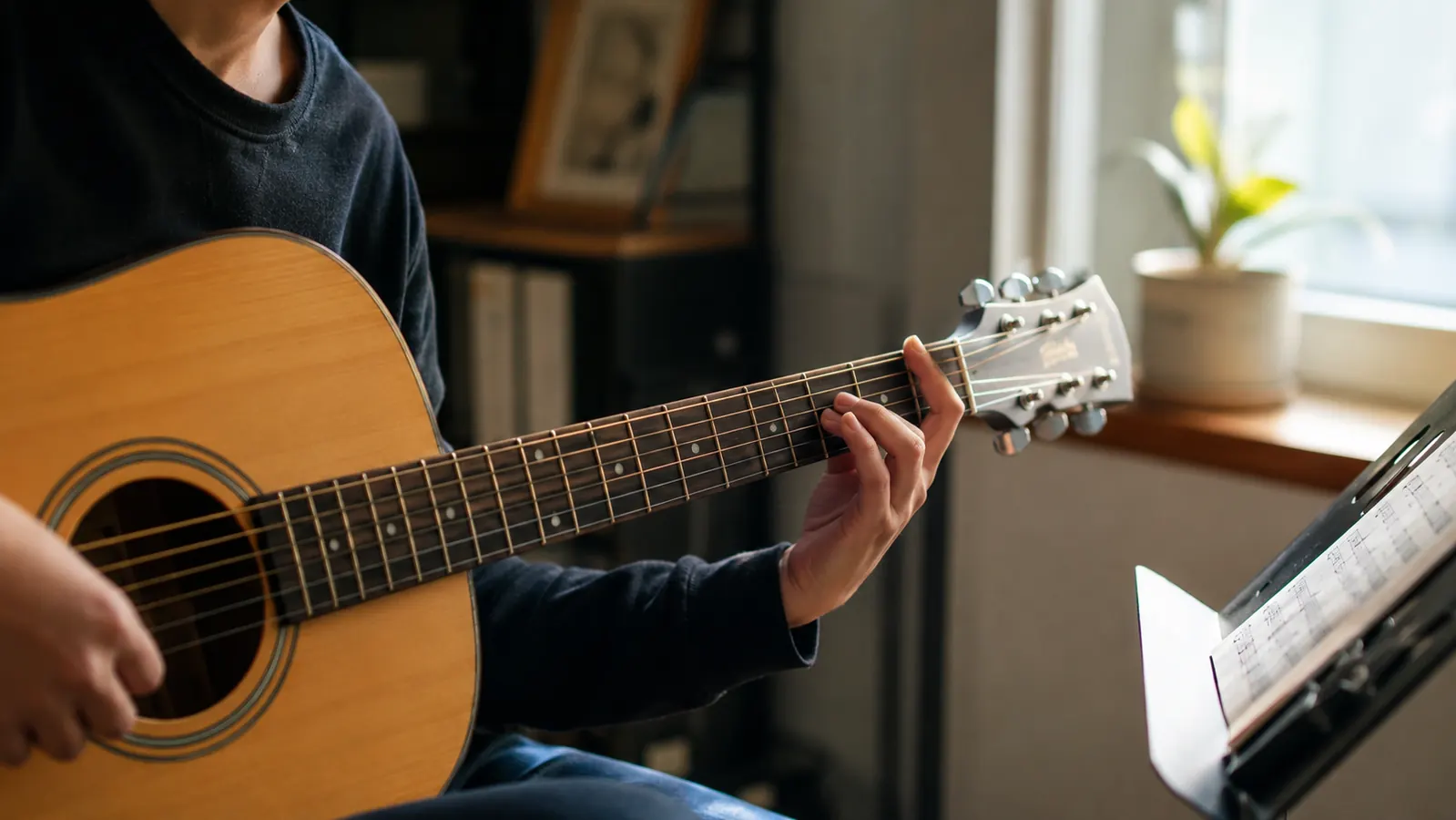
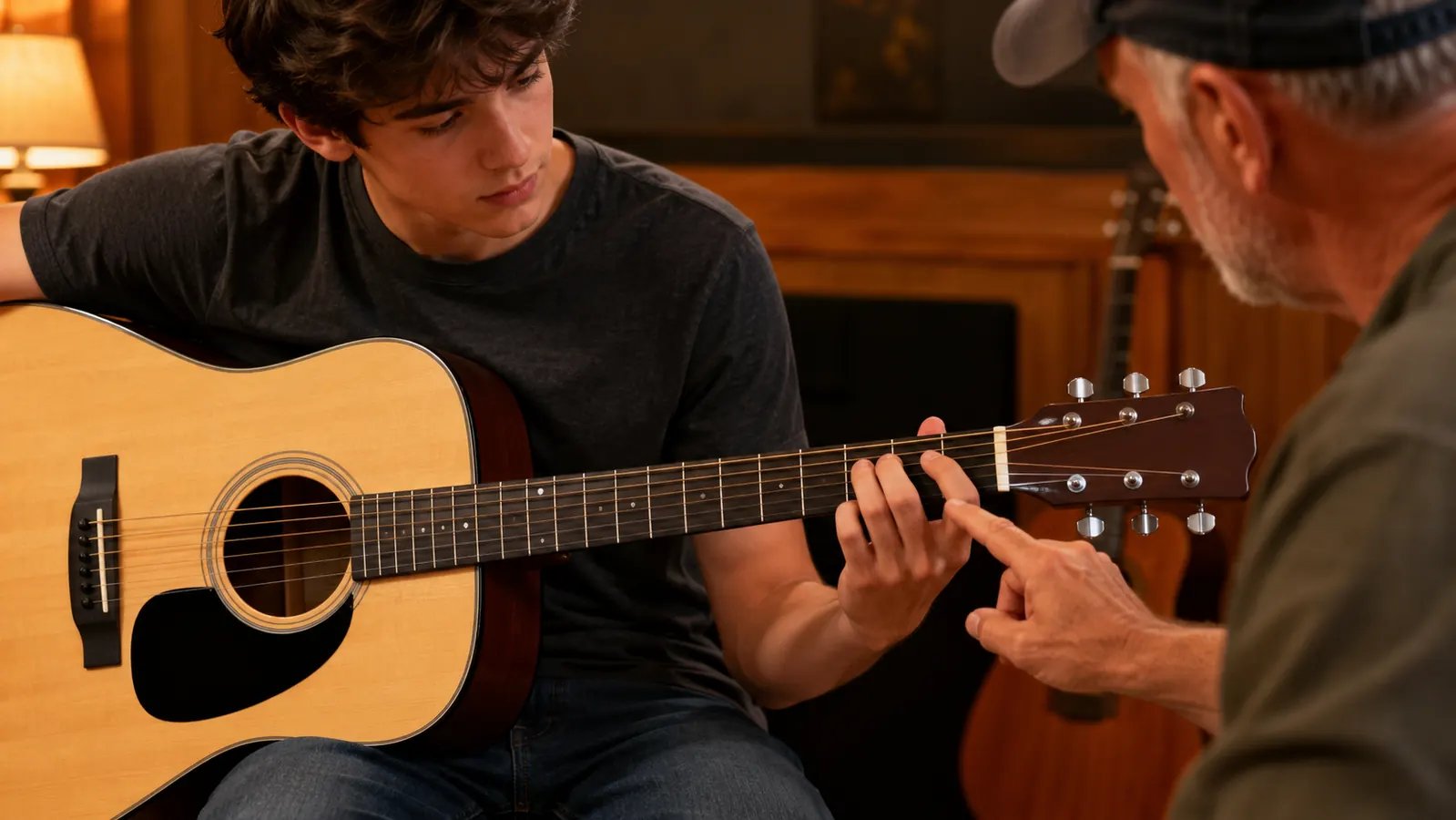
Eighteen months ago, in March 2025, I bought my first Fender CD-60S for a 13-year-old student named Marcus. He had been practicing on his dad's old laminate guitar, the kind with action so high that a clean F chord was a two-week project instead of a first-week lesson. I told Marcus's parents the same thing I tell every parent: the top is the voice of the guitar, and a solid top is where your money should go. Then I set out to make sure my own advice was worth following across a full teaching schedule.
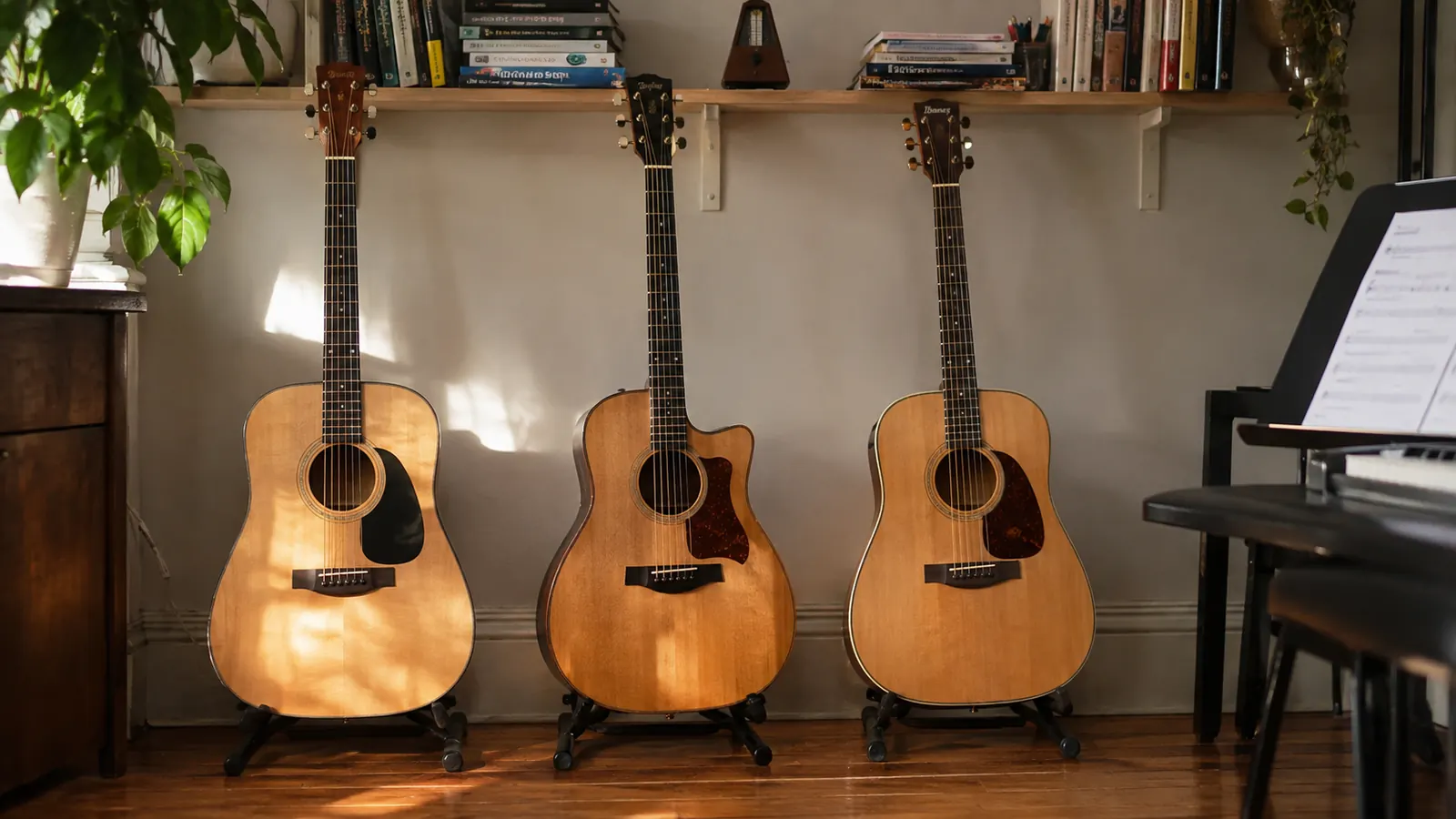
That first guitar survived two semesters with Marcus, a summer of camp gigs, and a move across town. By then I had bought a second CD-60S for a new student named Sofia and a third one to live on my studio wall as the spare. Between the three of them I have now taught well north of 900 lessons, and the CD-60S is still the guitar I hand to nearly every beginner who walks in without an instrument. Here is what 18 months of daily use actually looks like.
The Quick Verdict
A solid-mahogany-top beginner acoustic that holds tune, sounds warm, and survives a teaching studio. Buy it, set it up once, and you're done for years.
Amazon Check Today's Price →The beginner guitar that survives real lessons
After 18 months and three guitars, this is the one I hand to students first. A solid mahogany top, a comfortable neck, and tuning stability that holds up to 40 pickups a week.
Amazon Check Today's Price on Amazon →How I've Used It
Three CD-60S guitars live on stands in my studio, not in cases. That detail matters, because it means they get picked up between twenty and forty times a week, tuned three or four times a day, and knocked around by music stands, case handles, and the occasional overly enthusiastic air guitar. They ride the same humidity swings as the room, which in my part of the country means dry furnace heat all winter and sticky humid summers.
A typical week is about 25 private lessons plus two group classes. Every beginner starts where we all start, with open position chords, and the CD-60S is what most of them sit down with. I tune all three guitars before the first lesson block and again before the evening block, usually by ear and then by tuner, and they hold pitch far better than their price tag suggests. On a normal week I spend maybe two minutes total on tuning corrections after the morning pass.
In 18 months I have not needed a single repair on any of the three. I have adjusted the truss rod on one guitar twice, tightened a loose strap button once, and changed strings more times than I can count. None of that is unusual. What is unusual is that nothing structural has gone wrong, and one of the guitars has been knocked off its stand twice and lived to teach the next lesson.
Seasonal change is the honest test of any acoustic. When the furnace runs day and night in January, the studio air gets bone dry, and all three necks pull slightly flat until I correct them. I set the truss rod on each guitar once before the first winter, checked all three again after the spring humidity spike, and none has needed a touch since. A guitar that responds predictably to its environment instead of warping is worth more than its spec sheet. I keep all three out on stands rather than cased, so they share the room's climate instead of hiding from it, and that is exactly why I catch drift early instead of discovering a bowed neck in March.
What the Solid Mahogany Top Actually Does
The spec that matters is the solid mahogany top. Most guitars in this price range use laminated wood, a few thin layers glued together to keep cost down. A solid top is one piece of wood, and it does two things that matter in lessons. First, it responds to a light touch, so a student who is still building volume gets a fair sound without having to fight the instrument. Second, it opens up, which is how a solid top changes character over hundreds of hours of playing.
I can hear the difference when I pick up a laminate student guitar after the CD-60S, and so can the students themselves. The laminate guitar sounds boxy and thin below the fifth fret. The CD-60S has a round, woody midrange and enough low end to feel satisfying the day a kid finally nails a smooth G to C change. Mahogany is darker and drier than spruce, so if you are expecting the bright shimmer of a spruce-topped guitar, this one is not that. What it gives you is warmth and balance, which is exactly what a beginner learning to listen needs.
Strings matter as much as the wood at this level. The guitar ships with light-gauge strings, and I keep it that way for the first year. A beginner pressing medium strings over a spec action will develop sore fingertips and tense shoulders in equal measure. The CD-60S at light gauge plays easily enough that the thing the student notices is hand position and chord changes, not pain.
How It Sounds in a Lesson, Not a Showroom
Guitar demos on video are recorded with a condenser mic six inches from the soundhole, then compressed until everything sounds expensive. My students hear something different: a guitar across a twelve-foot studio, mixed with a metronome, my voice, and often a second guitar in the room. That is the honest test, and the CD-60S passes it.
The guitar projects well enough to be clearly heard in a duet, which is the most common format I teach. When a student strums a full chord at a steady tempo, the sound is balanced, no overpowering bass, no ice-pick treble. For a learner who is also learning to hear pitch and rhythm, that neutrality is a genuine strength.
The one tonal shortcoming I will name: the guitar gets a little congested when you really dig in. A heavy flat-picking intro, the kind a rock-leaning teenage student loves, pushes the top into a compressed, slightly nasal place. Back off ten percent and it sounds lovely again. That is a fair trade at this price, and it is the first thing I mention to anyone coming over from a friend's spruce-top guitar.
Build Quality Under a Teaching Workload
Fretwork is where budget guitars live or die, because one sharp fret edge will end a student's interest faster than any tone argument. All three of my CD-60S guitars came with properly dressed frets, no snags along the neck, and the wire shows real wear only on the first two frets of the guitar Marcus played hardest. The neck is a comfortable shape, not slim, not a baseball bat, and the satin finish gives no drag when a student's thumb slides up the back.
The tuners are sealed and honest. They drift a little during a dry week but return to pitch in a single pass, and after 18 months none of the three has a slip or a stripped gear. The nut is plastic, which is what I expect at this price, and it has been trouble-free. One guitar arrived with the action set higher than I like, so I did a standard truss rod tweak and a saddle adjustment, the other two were playable straight out of the box. My honest read: Fender's quality control is good but not perfect, so any buyer should plan one setup visit with a local tech, which is standard advice for every guitar at this price.
Finish durability has been the pleasant surprise. The satin finish shows honest forearm wear where students rest their arm, plus a couple of stand-accident dings, but no cracking and no peeling anywhere. Because this is the all-mahogany version, a dent shows as a natural wood dent, the same way it would on a guitar three times the price.
Changing Strings on a Studio Guitar
I change the strings on all three guitars every six to eight weeks, which adds up to more string changes in a year than most hobby players do in a decade. I stay with light-gauge phosphor bronze, the same weight the guitar ships with. A fresh set brightens the CD-60S noticeably, and my students call it out within the first lesson. The mahogany voice takes new-string ring without turning harsh, which is not true of every budget guitar I have strung.
Two details only show up during restringing. The bridge pins seat tight and never pop, even when a kid slackens the strings and wiggles them loose by hand, and the saddle stays perfectly seated through months of changes. I have also run a set a week past its best during a busy stretch. The top end loses its sparkle, but the guitar never goes dull the way laminates do, it just asks politely to be changed. A twelve-minute string change is the closest thing to real maintenance these guitars need.
What 18 Months of Student Hands Does to a Guitar
Here is the test most reviews never run: hand the guitar to a different student every hour and let them do their worst. A twelve-year-old will rest their forearm on the body while reaching for a chord. A seventeen-year-old will strum through a pick catching under a string. Somebody's little brother will knock it over reaching for a snack. My third CD-60S, the loaner, has lived through all of it for a year now.
The wear is honest but cosmetic. There is a forearm sheen on the top edge, a scratch near the pickguard where one student's sharp pick dragged, and a single ding on the lower bout from the stand accident. The neck still feels straight, the frets stay crowned, and the tuning pegs have not developed the wobble that shows up on cheaper guitars by month six. Compared to the two-year-old laminate loaner I retired, which had a twisted neck and two dead tuners, the Fender has held up in a different class entirely.
The other teachers in the building have started borrowing the spare instead of hauling their own guitars across the hall between rooms. One of them asked me where the rental invoices go at the end of the month. When a working teacher has to convince colleagues the guitar is actually for sale and not a small instrument fleet, that tells you more than any spec sheet does.
Parents pick up on it too. Three times this year, a parent watched their kid during pickup, asked what guitar that was, and wrote down the model name. Two of those families now own a CD-60S, bought after a single conversation. The third asked me straight whether her small daughter should start on a 3/4 size, and I said yes without hesitation, the fuller body would fight that child for years. They bought the right small guitar elsewhere and she is still taking lessons. Recommending the honest thing does not cost me a sale, it costs me nothing, because the guitar sells itself to the families it fits.
After 18 months and three guitars, the CD-60S is the only beginner guitar I have ever bought a second copy of.
Alternatives I've Considered
The two guitars I recommend most to students are this Fender and the Yamaha FG800, which I have compared head to head in a separate article. The Yamaha has a spruce top, a slightly stiffer voice, and a neck that always feels a touch slimmer to me. For kids with small hands, the Yamaha is sometimes the better match. For most of my students, the Fender's shorter scale and warm mahogany voice are what keep them coming back to the practice stand. Month after month, at least one kid in every class picks up the CD-60S specifically because it sounds like the music they actually want to play.
I have also pointed students at very cheap laminate guitars from budget brands, the ones that sell for less than a Saturday lesson. The difference is not subtle. The laminates go out of tune constantly, sound thin, and end up in the corner. Their only real advantage is the price, and in my experience a student who is actually improving does not stay on one long enough for those savings to matter. If money is truly the obstacle, buying a used CD-60S beats buying any new laminate I have tried.
What I Liked
- Solid mahogany top that opens up over months of play
- Holds tune through a full teaching week of constant pickup
- Warm, balanced tone that flatters a beginner's light touch
- Comfortable neck and light strings, easy for first-year hands
- Finish and fretwork have survived 18 months of studio abuse
Where It Falls Short
- Full-size dreadnought body is too big for small kids
- Quality control varies, one of three needed a setup out of the box
- Sounds a bit congested when you dig in hard
- No electronics, no cutaway, acoustic only
Who This Is For
This is for the beginner and the parent buying a first full-size acoustic, for the hobbyist coming back to guitar after a decade away, and for anyone currently fighting a laminate hand-me-down. It is also for the teacher looking for a student guitar that does not need constant babysitting. If you want a solid top, a comfortable neck, and a sound that will keep a new player showing up to practice, the CD-60S is the safest recommendation I make all year. Before you pull the trigger, my step-by-step guide to choosing a first acoustic guitar walks through exactly what to check on any guitar in this range.
Who Should Skip It
Skip it if your student is younger than about 11 or built small, because the full-size dreadnought body will be a stretch across every chord. That player needs a 3/4 or other scaled-down option, not this guitar. Skip it if you want a bright spruce-top sound, a cutaway for high-fret access, or a pickup for stage use, because this model is warm, acoustic-only, and unplugged. And if you want every flaw spelled out rather than summarized, including the setup roulette and the drop test, read my deeper CD-60S review where I go into the annoying parts nobody leads with.
A student guitar you will not have to fight about
Eighteen months of near-daily use and three copies bought later, this is still the guitar I hand to beginners first. Solid top, warm voice, and it holds tune all week.
Amazon Check Today's Price on Amazon →