

If you are shopping for a first acoustic guitar, you have probably seen the words solid top buried in a product title and wondered whether they mean anything. They do. I have taught beginner guitar for over a decade, and the top is the first spec I check, because it decides what the guitar sounds like on day one and what it sounds like five years later.
The guitar I hand to new students, the Fender CD-60S I keep by the door of my studio, carries a solid mahogany top over a mahogany body. It is not the fanciest acoustic I own, but it is the one I recommend most, and the solid top is the reason. Here are ten reasons it earns that spot.
The Solid-Top Guitar I Hand to Every New Student
The Fender CD-60S has a solid mahogany top, a warm voice, and a setup that survives group lessons. It is the guitar I recommend most to beginners and to parents buying their kid's first real instrument.
Amazon Check Today's Price on Amazon →The Top Is the Engine of the Guitar
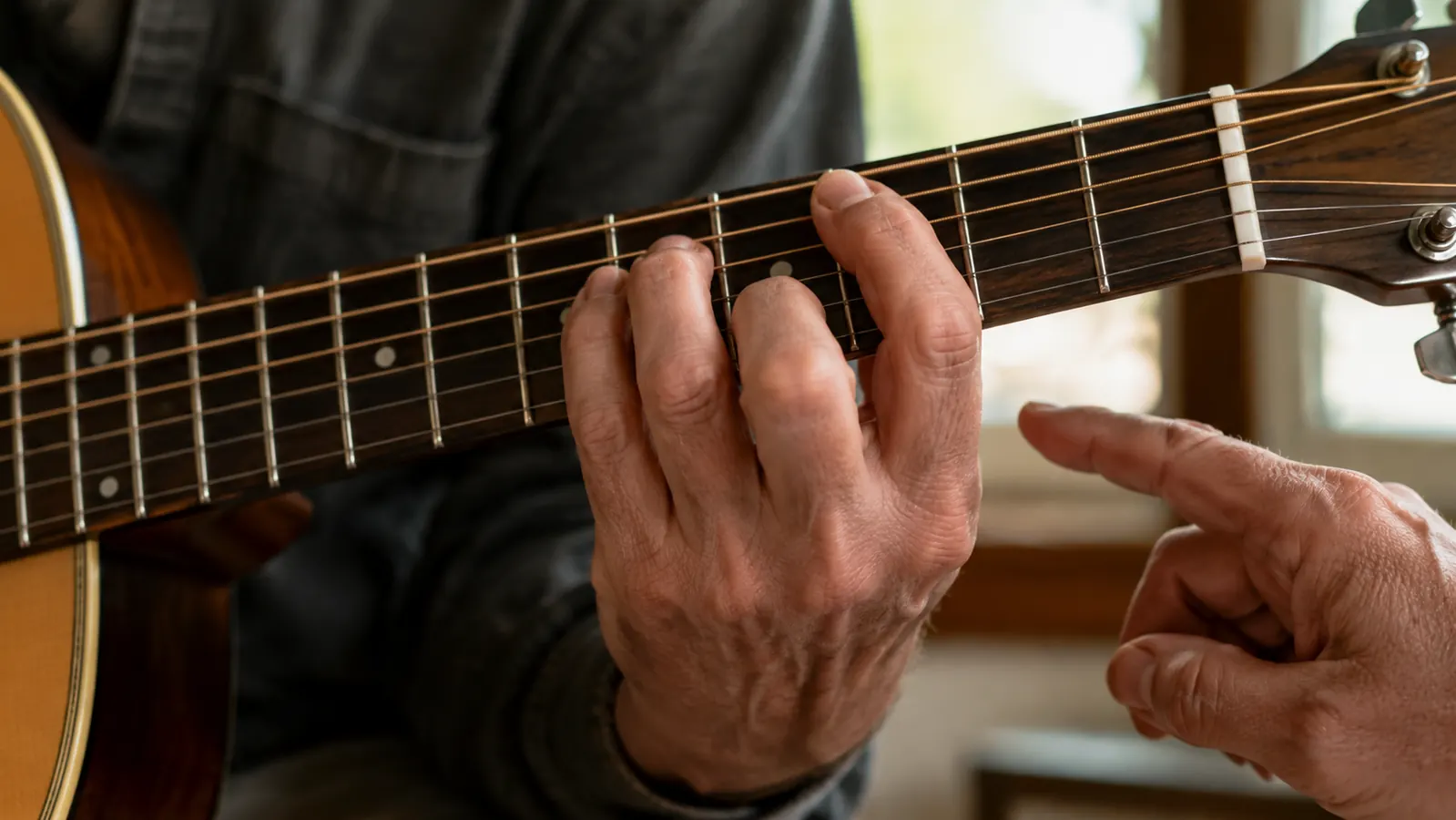
Everything a guitar sounds like comes off the soundboard. The strings vibrate, the bridge passes that energy into the top, and the top turns it into air. A laminate top is a sandwich of thin wood around a glue core, and every layer dulls the transfer. A solid top is one piece of wood doing the whole job. In lessons I play the Fender CD-60S and a laminate student model back to back, and the first thing beginners hear is more air and more bloom on every chord.
It Sounds Better Already, on Day One
Laminate guitars often sound boxy, woody, and quiet. A solid top does not need to be broken in to beat that; it is more alive out of the box. When a student starts on a guitar that rings, they hear the instrument answering their fingers, and they keep picking it up. Half of my job is keeping beginners interested, and a guitar that sounds good does half of that job for me. Unpacking a guitar that already sounds good is the best first lesson I give all year.
Solid Tops Open Up With Age
Wood is alive, and a solid top vibrates more freely as years of playing loosen it up. Players call it opening up. The Fender CD-60S I bought for the studio in 2024 sounds fuller now than the day it arrived, more ring on the trebles and a warmer low end. A laminate top never changes; it is exactly what it was on day one, forever. If the guitar is going to be played past the first year, that aging is a real return on the extra money.
It Teaches Dynamics You Cannot Fake
A solid top responds to the player. Strike harder and the note takes more air; ease off and it softens musically. A laminate top flattens that range, so hard and soft sound closer together and dynamics lessons fall flat. I can hear the exact moment a student discovers they can whisper a chord, and it arrives sooner on a solid-top guitar. Feeling the instrument answer your touch is the first lesson in phrasing, and it is free on a responsive top.
Notes Ring and Sustain Longer
Sustain is how long a note keeps ringing after you strike it. A solid top holds the vibration longer because no glued laminate layer bleeds the energy away. For beginners that means a chord does not die the second they stop strumming, and there is time to hear whether it is in tune before it fades. Chord changes feel kinder when the ring carries you across. It is a small thing, and it makes a new player sound more polished immediately.
It Projects Across a Room Without an Amp
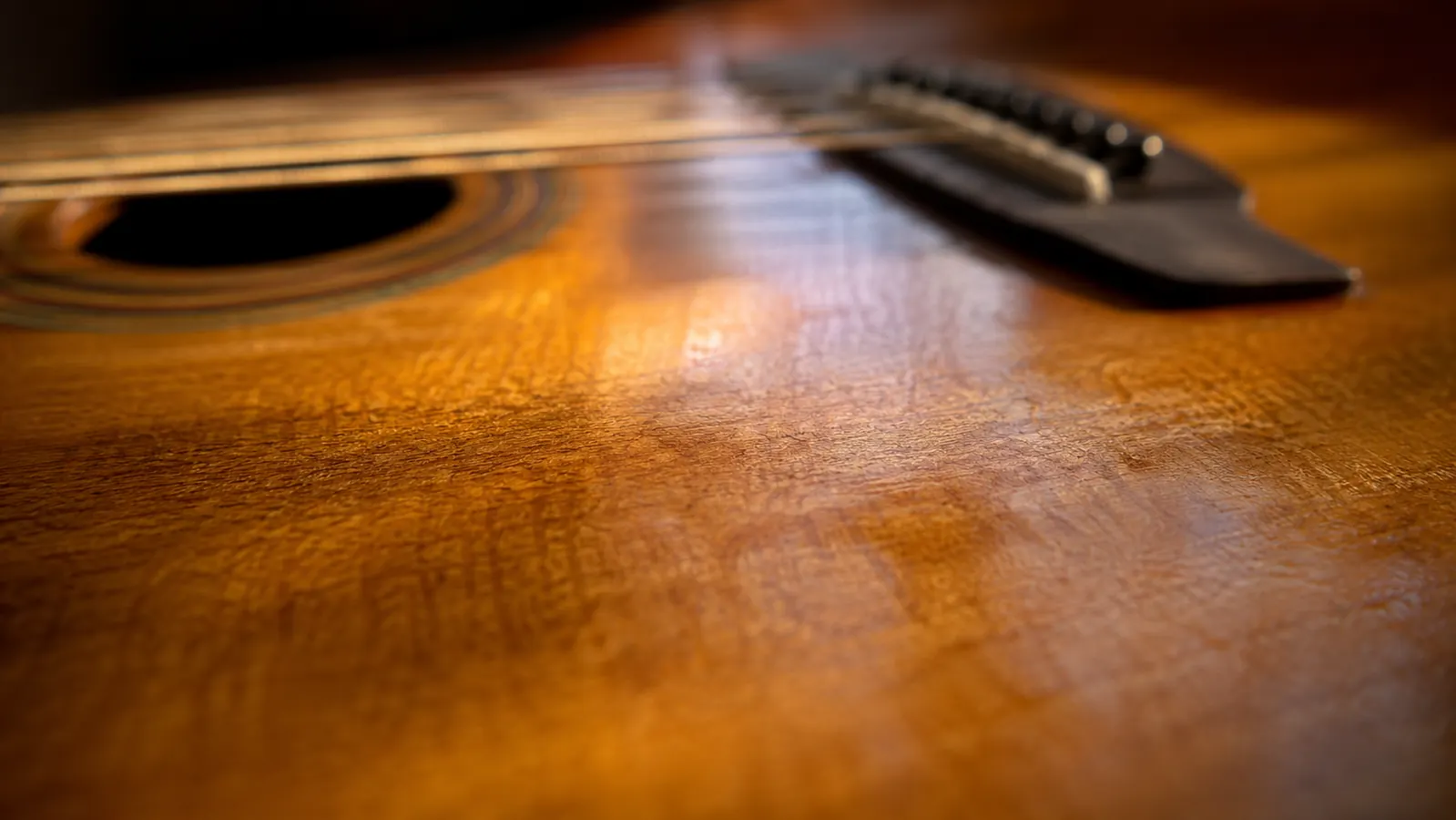
If you will ever play for anyone, an acoustic has to reach the room on its own. A solid top pushes more air, which means more volume and better tone at the back of the room. My weekend cover band plays an outdoor patio gig most summers, and I have taken both kinds of guitars unplugged. The solid top carries to the fence with its tone intact; the laminate gets there quieter and softer. Projection is a thing you cannot add later with a cable.
It Takes a Pickup Well Later
A solid top also positions you for the day you want to plug in. It moves more air and voices more evenly, so a pickup has a better sound to start from, and it gives a tech room to work with when one gets fitted. The Fender CD-60S is the guitar I point students to when they mention playing out someday, because it can grow with them. Starting with the top means the upgrade path is already paved.
It Makes Practice Feel Like Music, Not Chore
A guitar that sounds pretty invites repetition. Beginners stop practicing for a hundred reasons, and a muffled, dull instrument is a real one. When a responsive top rewards a well-placed chord with a richer sound, the loop between effort and reward shortens. I cannot show you a study with a chart, but I can show you my roster: the students on nicer-sounding guitars are the ones who come back to lessons with calluses and new questions.
It Is Built Around the Music, Not the Trim
Here is the honest part of a solid top on a budget guitar: the builder spent the money where you can hear it instead of on gloss and inlay. A plain solid-top guitar usually beats a laminate one dressed up with rope binding and abalone stickers. When you hold the Fender, the wood, the neck, and the tuners feel like one instrument instead of a kit. That coherence is how a budget guitar earns years of daily use.
It Grows With the Player Instead of Getting Old
A laminate top will never get better, so the guitar stays exactly as interesting as the day you bought it. A solid top keeps maturing and keeps surprising you. For parents buying a first guitar, that is the whole argument: buy the instrument the kid will still want in three years, not the first of three. One solid-top guitar played for years beats three cheap ones every time.
What I'd Skip
I do not hand a solid-top to every student, and neither should you. If the guitar belongs to a small child who will outgrow it in two years, or if it is going to live in a school closet where nobody manages humidity, a laminate guitar is tougher to dent and cheaper to replace. I keep one on a floor stand in my studio for exactly those students, and it does its job fine.
Just know what you are giving up: the one quality that keeps an acoustic fun, which is a voice that gets better. If you can keep the guitar in a room and away from the radiator, a solid top is the better long-term buy, and the CD-60S is where I would start the search.
The CD-60S I bought for the studio in 2024 sounds fuller today than the day it arrived. I have never once heard a laminate top do that.
Still Weighing a Solid Top Against Its Price?
The Fender CD-60S is the solid-top I hand to new students and the one parents ask about most. It sounds good on day one, keeps getting better, and carries the warranty to match.
Amazon Check Today's Price on Amazon →