
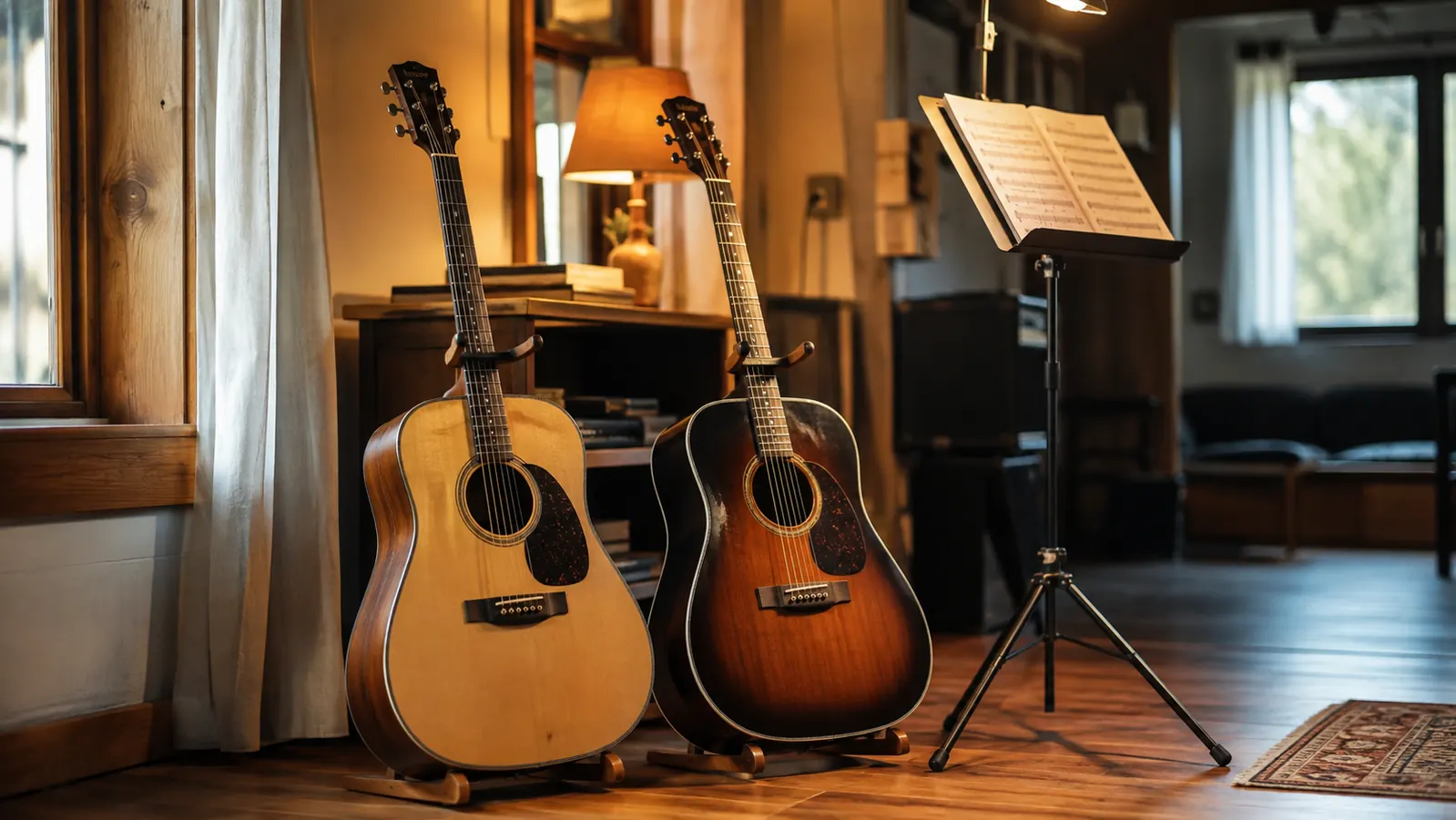
If you have spent even one evening reading beginner guitar threads, you already know the two names that keep rising to the top of every reply: the Fender CD-60S and the Yamaha FG800. Both are solid-top dreadnoughts sitting in that exact budget band where most parents start, and both have loyal owners who will argue for them like sports teams. I teach lessons five nights a week out of a small studio, and I have owned and loaned both guitars to students for years. Let me give you the answer those threads never quite land on: for a first guitar, for a child, I keep buying the Fender CD-60S. Here is the honest reasoning, including where I think the Yamaha is genuinely better.
The short version. The Fender CD-60S wins for a first-timer because of its warm all-mahogany voice and the two-year warranty Fender puts on it in writing. The Yamaha FG800 wins on out-of-the-box setup and factory consistency, and it is the better buy for an adult who already plays and wants a bright, loud dreadnought they will keep for twenty years. The two cost about the same, weigh about the same, and both are a real step up from anything in a department-store bundle. The difference between them is not quality. It is who the guitar is for.
One note on how I come at this before the spec talk. I am not comparing two guitars I played once in a shop. My studio keeps a small rack of loaner acoustics, and both of these have spent literal semesters in students' hands: kids who have never held a guitar, adults returning to it after decades, and the occasional player shopping for their first real instrument. Everything below comes from watching students play them, not from reading the marketing.
How These Two Guitars Actually Sound
Strap them on back to back and the first honest difference is not build quality, it is tone. The Fender CD-60S in this configuration is all-mahogany, and mahogany is warm by nature: woody, mellow, quick to settle, with a soft attack and less shimmer on top. The Yamaha FG800 pairs a solid spruce top with laminate back and sides, and spruce is the classic dreadnought voice: brighter, punchier, more projection, and longer sustain that rings out behind a chord.
For a player who already knows what they are doing, the FG800 is arguably the more impressive box. It cuts through a room, it opens up as the top gets played in, and its voice is what most people picture when they close their eyes and think acoustic guitar. But here is the part that surprised me when I started listening as a teacher instead of a player: beginners sound better faster on the CD-60S. A kid hammering barre chords that are not quite seated yet gets far less punishing feedback from the mahogany warmth. The spruce top shows every mistake like a test score. The mahogany lets the song win.
Feel is the other thing you cannot read off a spec sheet, so here is the honest version. Both are full-size dreadnoughts, which means both are big for a small child; neither cradles like a parlor guitar, and a ten-year-old will complain about the size either way. Both carve comfortable necks and take standard light strings without feeling stiff. If the player is under about twelve, plan on a shorter travel guitar as a backup. If the player is a normal adult, either of these is comfortable for a two-hour practice.
| Fender CD-60S | Yamaha FG800 | |
|---|---|---|
| Street price | sits in the beginner budget band, with sales through the year | the same band, and it goes on sale just as often |
| Tone | warm all-mahogany voice, mellow and forgiving to a beginner's hands | bright spruce voice, punchy with long sustain |
| Projection | plenty for a bedroom or practice room | more headroom and cut, fills a jam circle better |
| Quality control | good, with the occasional budget Fender needing a setup pass | legendary consistency, playable straight out of the box |
| Warranty | 2-year warranty, stated in writing on the listing | standard limited warranty |
| Neck feel | comfortable taper, 1.69-inch nut | same 1.69-inch nut, equally easy to grab |
| Best for | first-time and younger players | adult players who want the classic dreadnought voice |
Where the Fender CD-60S Wins
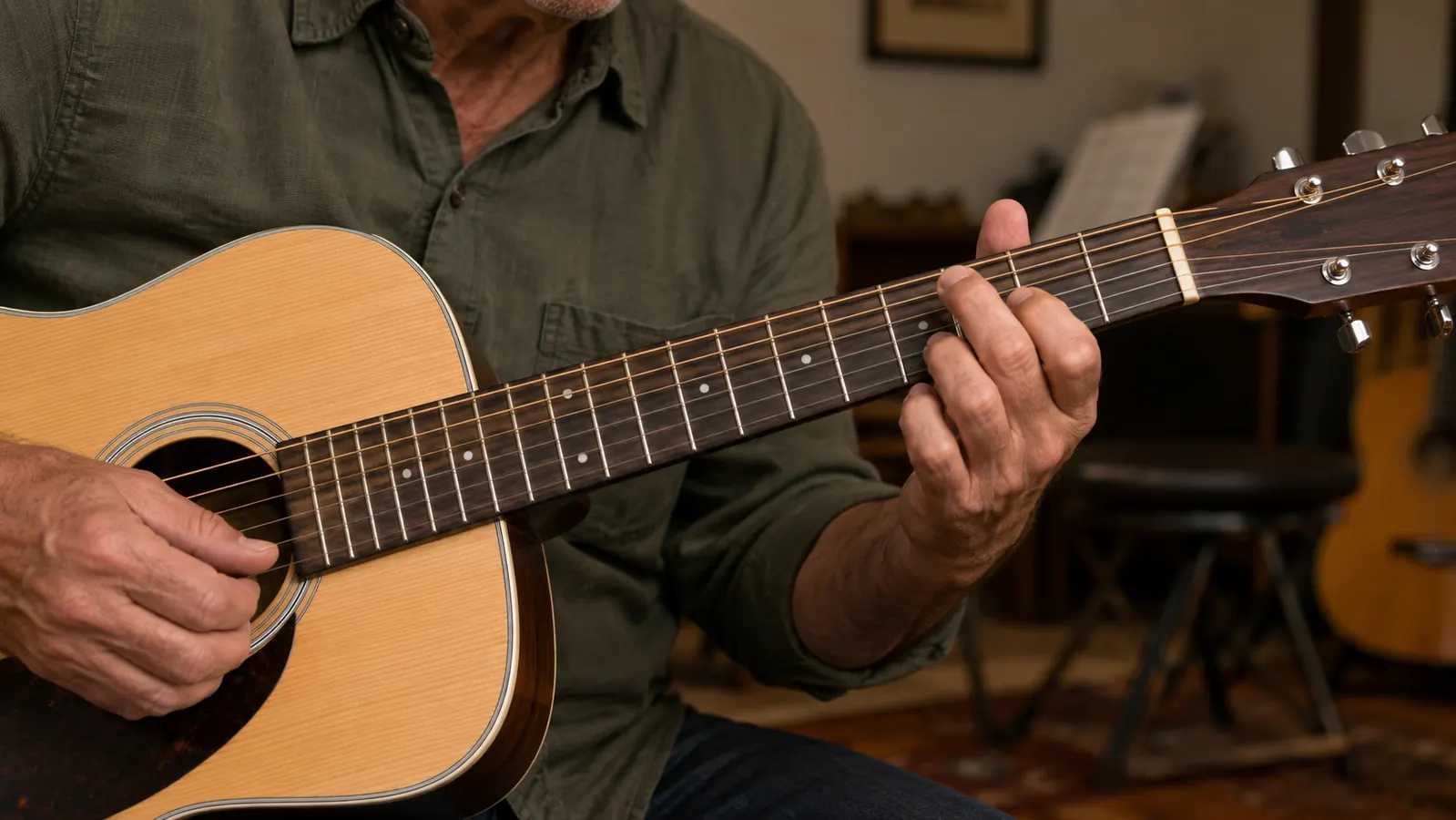
Put it simply: the CD-60S forgives. The all-mahogany body softens the harsh edge of a beginner barre chord, rounds off a pick that scrapes three strings at once, and makes a light-handed eleven-year-old's strum sound fuller than it has any right to. In my studio the difference shows up by the third lesson. A student on a spruce box hears every dead note and starts apologizing for their playing. A student on the CD-60S just keeps going, and for a beginner that momentum is worth more than another second of sustain.
The second win is the one I can put on paper, and too many reviews skip it. Fender backs the CD-60S with a two-year warranty, spelled out right on the listing. Yamaha's limited warranty is standard for the category and rarely needs to be used, but Fender is the one leading with a written promise. In the real world that matters when a teenager drops a guitar off the couch arm. I also watch parents, grandparents especially, nod a little harder when the headstock says Fender. The name already means guitar to them, and the warranty card makes the box deliver on it.
I keep the full multi-year notes on this guitar, including the setup a brand-new one needed and how it held up through a year of daily lessons, in my long-term Fender CD-60S review.
A warm guitar forgives what a new player does wrong. Forgiveness is what keeps them practicing.
Where the Yamaha FG800 Wins
The FG800's first win shows up before anyone plays a note. Yamaha's budget factory is the consistency benchmark of the industry. I have opened FG800s that needed nothing: no setup, no truss-rod turn, no new strings, tuned and ready in fifteen minutes. That is rare at this price, and it is the reason so many shops hand a parent the FG800 and call it the safe choice. If you are buying blind, without a guitar-playing friend to check the instrument, the Yamaha is the one I would gamble on arriving perfect.
The second win is the sound adults actually want. The spruce top gives the FG800 more headroom, more cut, and a longer tail on every note, which is exactly what you want when you are strumming and singing along or jamming with one friend and a cajon. The voice opens up as the top ages, so a five-year-old FG800 sounds better than the day it was bought. There is a quieter practical edge too: the FG800 has been the default budget recommendation in shops for so long that a used one sells fast, which is worth something if a student tells you this is a six-month experiment.
Both of these guitars earn their place on the short list of real solid-top instruments at a starter price, because a solid wood top is the upgrade that separates a genuine guitar from a laminated toy. If that phrase is new to you, the plain-language case is worth a minute before you buy either one: 10 reasons a solid-top acoustic is worth the upgrade.
The Warm-Voiced Fender I Keep Handing to Students
All-mahogany warmth that forgives a beginner's mistakes, plus a two-year warranty in writing. If this is the guitar for your house, today's price on Amazon is worth checking before the sales turn over.
Amazon Check Today's Price on Amazon →How the Necks Compare Up Close
Both guitars use the same 1.69-inch nut, roomy enough for a G chord without stretching a small hand. The profiles differ in hand: the Yamaha neck is the rounder, fuller of the two, and the Fender is a hair slimmer through the middle, which my younger students with smaller hands reliably prefer. Both wear a smooth satin finish, so neither grabs a sliding thumb.
Across a group class the two voices separate in ways a quiet room hides. The FG800 cuts: its spruce top throws the attack forward, and it stays articulate even when four kids strum hard together. The CD-60S sits warmer and lower, which sounds quieter in a group at matched volume, and why I do not mind a beginner practicing alone in a bedroom. A lone beginner does not need to cut through a mix yet; they need to sound like progress, and the Fender delivers that at lower volume. The player who plans to jam with friends soon should take the Yamaha's cut.
Which One Survives a Semester
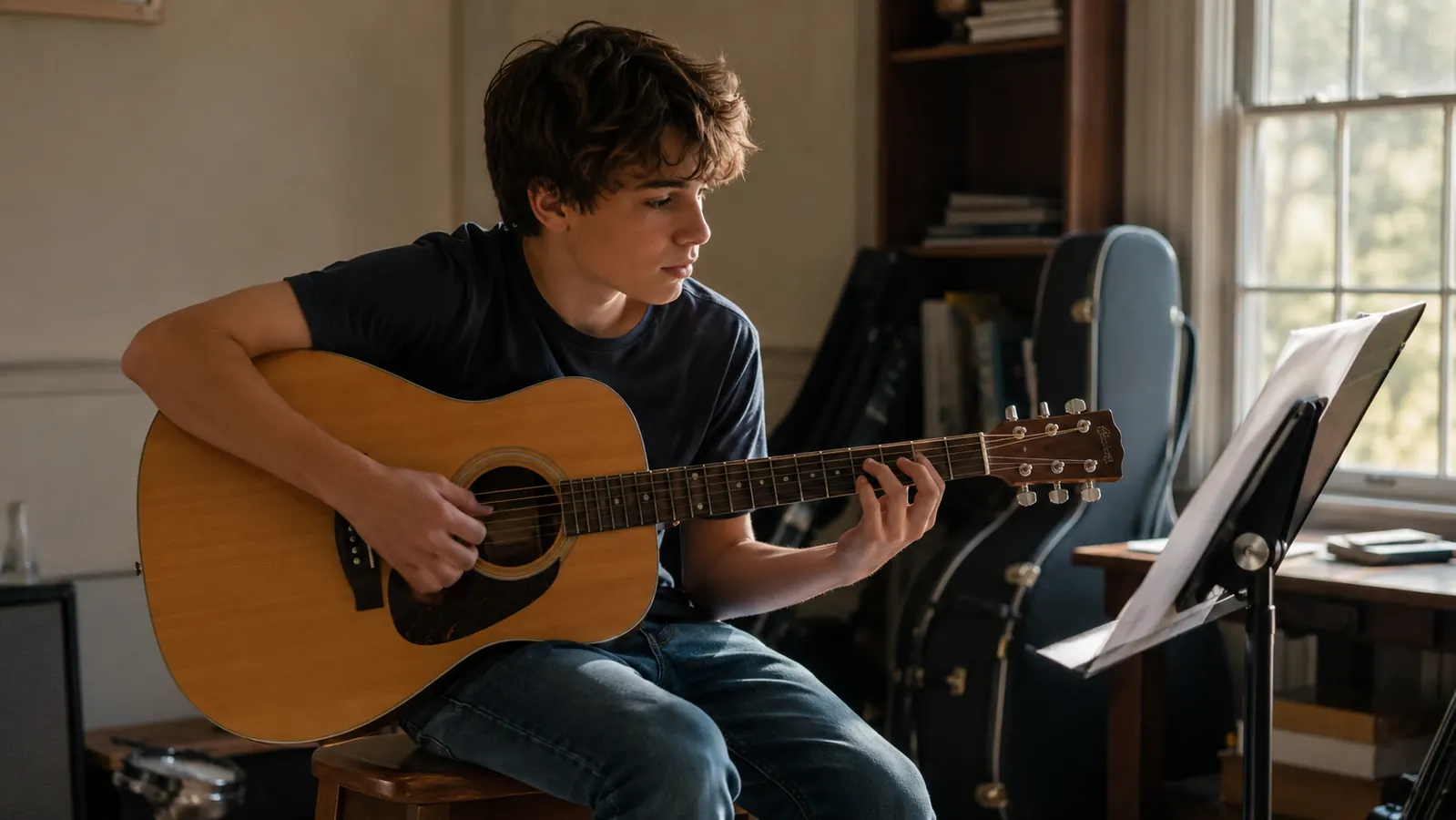
The durability story is the finish. Fender's body wears soft satin that shows fingerprints and scuffs within a semester; Yamaha's gloss hides the same wear and wipes clean. Neither breaks from student handling: I have watched the same fourteen-year-old ding both, and hand them back playable with straight necks and tuners that still hold. If the enthusiasm fades, the Yamaha resells faster, while the Fender moves slower to a warmer crowd, parents who want the headstock they remember.
What to Check Before You Buy Either One
Whichever way you land, give the new guitar ten minutes of your time when it arrives, because shipping and seasonal humidity can take a toll on any budget acoustic. Sight down the neck from the headstock; it should look straight, not twisted. Play the low E at the first fret and again at the twelfth and listen for buzzing. A faint buzz on a brand-new budget guitar is common and usually settles as the strings do, but a rattle on every fret means the instrument needs a setup visit.
Check the tuning machines too. Budget tuners are where corners get cut, and a string that will not hold tune is the fastest way to convince a new student they are bad at guitar. Turn each one, press the string down, tug it, and tune it back up. Then look at the nut: the strings should sit in their slots and stay put when you bend. If anything fails, use the warranty before you reach for a screwdriver. Both companies honor coverage, and a shop setup on a budget guitar is money well spent.
One last note on buying strategy, since this is a comparison and price is part of the story. These two dance around each other in price all year, and neither is worth paying a premium for on the day you happen to look. If one of them is on a deep discount when you check, that is a perfectly good reason to let the chips fall the other way. The Fender on sale beats the Yamaha at full price, and the reverse is just as true. My verdict is about these guitars at their normal price, not about passing on a good deal because you felt committed to a headstock.
Who Should Buy Which
Buy the Fender CD-60S if you are buying for a child, a skeptic, or anyone who needs the guitar to be kind on the first night. The warm voice, the two-year warranty in writing, and a headstock your family already recognizes make it the right box to put under the tree. Buy the Yamaha FG800 if you are the player, you are sure you will keep playing, and you want the loud, bright, uncomplicated dreadnought at the cheapest honest price. These are two different voices, and they are telling you who they are for.
Here is the tiebreaker I use with parents who are deciding on trust because they cannot audition the guitars: ask one question. Is the goal to get this kid playing next week, or get them playing for the next ten years? For the first goal, the warm, forgiving Fender wins, because it hides exactly enough of the early mess to keep practice happening. For the second goal, either one is a fine foundation and the Yamaha's brightness will age beautifully. If you are reading this as a parent with a beginner's bedroom on the other end of it, my honest pick stays the Fender CD-60S.
The Bottom Line
Both of these are good guitars, and the whole comparison folds into one sentence. The Fender CD-60S is the warm, forgiving, warrantied first guitar I recommend to most of the families who walk into my studio, and the Yamaha FG800 is the bright, consistent dreadnought I would hand to the adult who is sure they are in for the long haul. The Yamaha wins the consistency argument and the loudness argument. The Fender wins the gentleness argument and the warranty argument, and for the person this article is really for, a parent buying a first guitar, gentleness is the argument that keeps a kid going.
Give a First-Timer the Fender CD-60S
A first guitar should be warm enough to encourage, sturdy enough to survive a school year, and backed by a written warranty. Check today's price on Amazon and lock in the listing before the sales rotate.
Amazon Check Today's Price on Amazon →