
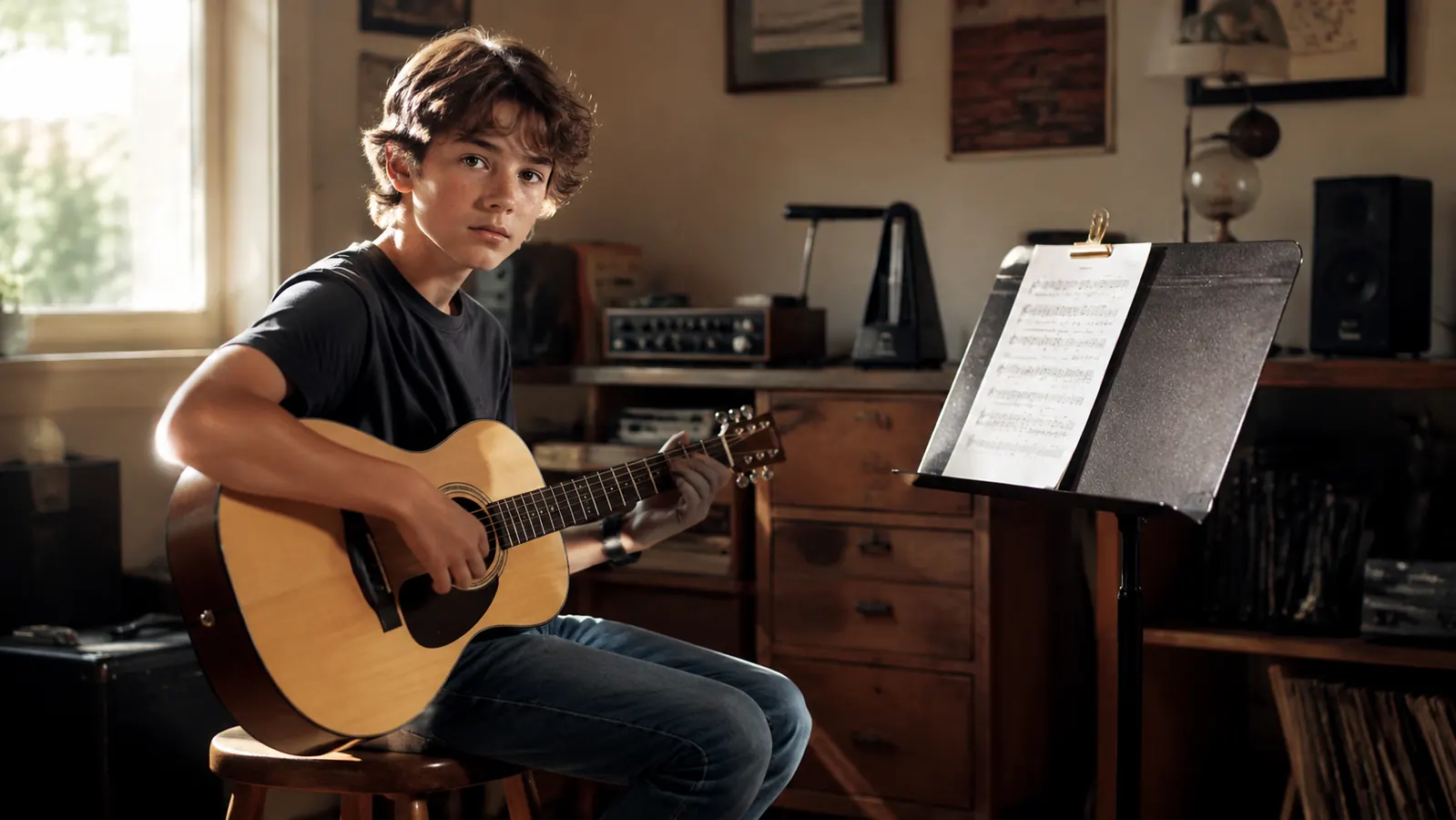
Eli's mom sent me the text on a Tuesday night in October. 'He says he wants to quit,' she wrote. 'I don't know what else to try.' I know that message. I get some version of it every year, and nine times out of ten the kid is the last thing to blame. Last fall, a reluctant twelve-year-old and a Fender CD-60S proved it to me all over again.
Eli was twelve, the younger of two brothers who started coming to my studio the same week in September. Marcus was fourteen and had asked for a guitar for his birthday. Their mom drove them both on Wednesday afternoons to save a trip, and Eli arrived with the face of a kid who had been talked into something he never asked for.
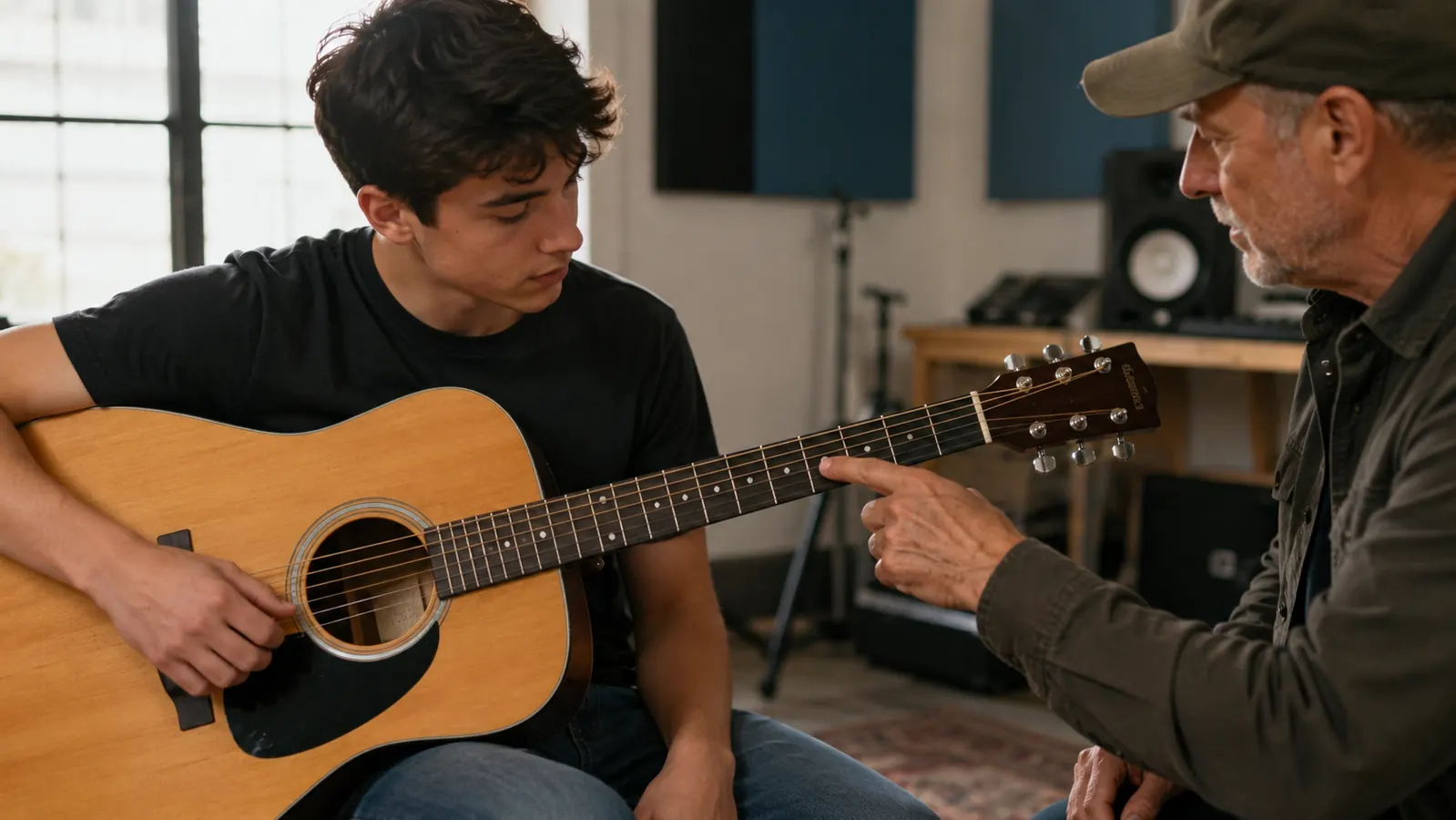
They showed up with a guitar their cousin had grown out of. It was a laminate model with a neck you could flex, and the strings sat so high off the fretboard that holding down a G chord took real strength. I tuned it, played a few bars, and winced. Every note buzzed somewhere up the neck, and the strings had grooves worn into them where they crossed the frets. That instrument would have discouraged a grown adult, let alone a twelve-year-old with a short attention span.
Marcus took to guitar the way some kids take to basketball practice. He fumbled, laughed at himself, and came back the next week a little better. Eli was different. He balanced the guitar on his knee, repeated the same mistakes I had fixed a week earlier, and by the end of each lesson his fingertips were raw. 'It hurts,' he said, when I asked why he kept shaking his fretting hand. His hand position was fine, thumb behind the neck, wrist straight. So I looked at the guitar again, and I started to think the problem was not the student.
The neck on that old guitar grew worse as the season went on. We tuned it at the start of every lesson and it drifted flat before we finished. Two months in, Eli was still showing up, but he had quit in his eyes. A kid who shows up without wanting to be there is not learning anything, and I could see his mom bracing for the conversation she was about to have.
That Tuesday, instead of telling her to be patient, I asked her to let me try one thing. I keep a rack of guitars in the corner of my studio for students who arrive with an instrument that is quietly defeating them. The next Wednesday, when Eli shuffled through the door, I handed him a Fender CD-60S instead of his cousin's castoff.
Six weeks after the switch, Eli sent me a video of himself playing the whole chorus of his favorite song. His mom said he was practicing before breakfast.
When a kid wants to quit, check the guitar before you blame the student.
In my studio, the Fender CD-60S is the guitar I hand to students whose own instrument is fighting them. A solid mahogany top, a neck a kid's hand can actually wrap around, and a setup that stays put. If your child's fingers hurt every time they practice, that is a fixable problem, and this is the fix I trust.
Amazon Check Today's Price on Amazon →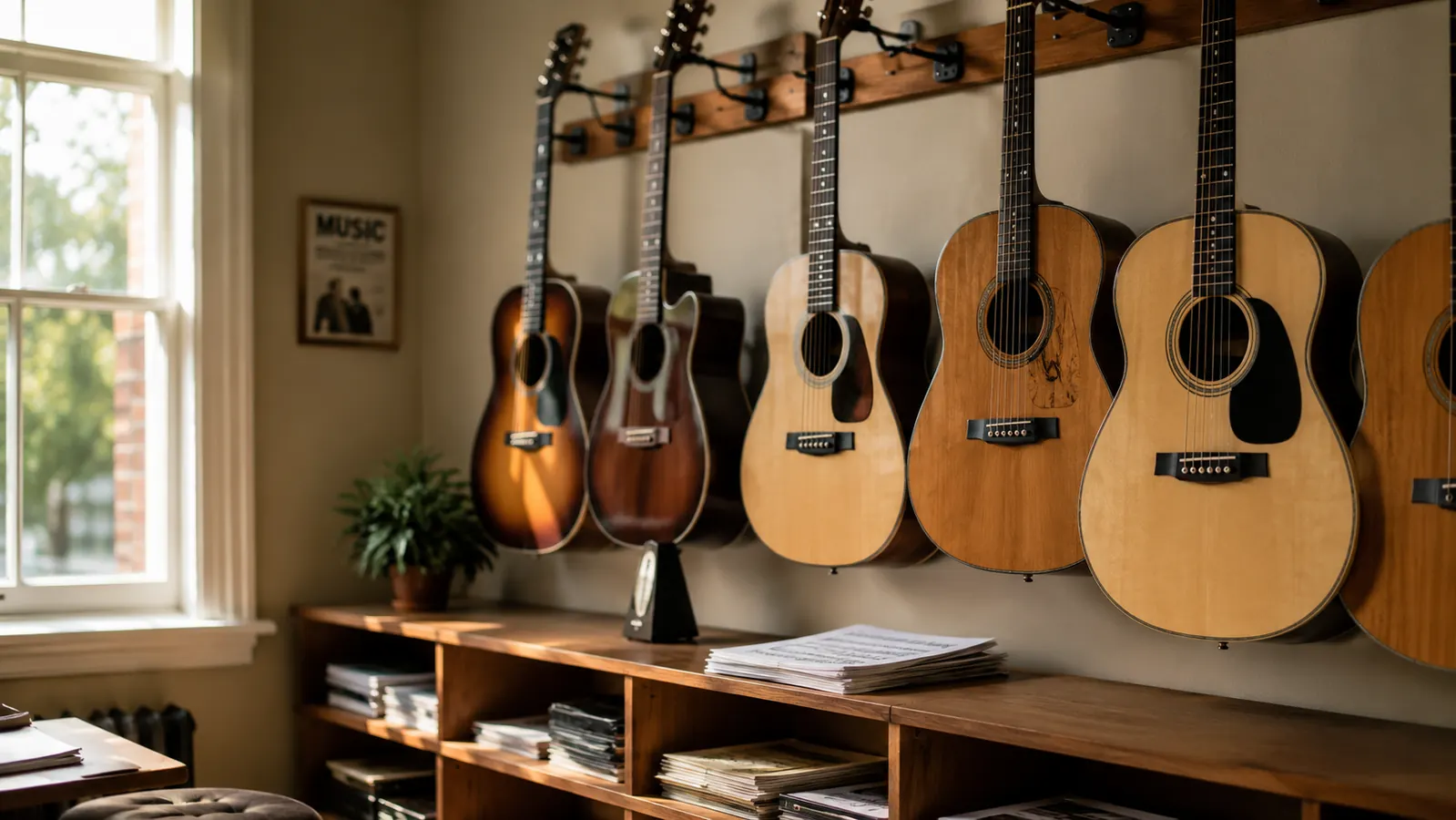
Eli didn't trust it at first. Kids who think they are the problem carry a lot of armor. But he took the guitar, sat down, and his hand found the neck without the usual struggle. It is light, the top is solid mahogany, and the first strum rang out clear and loud enough that he looked up, surprised, like the sound had come from somewhere else. That was the first time I saw curiosity on his face instead of resignation.
The next week he asked if he could learn a riff from a song I had never heard of, something he had found on his phone. The week after, he asked for a second song. Practicing started happening at home on its own, which is the part no teacher can do for you. By December he was the one in the family who sat down with a guitar without being told. He showed up one Wednesday with a grin and a new callus, which in this job is the closest thing there is to a report card.
I retell this story at meetings with parents because the moral is not that my studio is magic. Kids quit when the instrument they are supposed to practice fights them. High strings are a daily argument, and most beginners lose that argument. The Fender CD-60S is the guitar I reach for when I want to end it, and I have handed more of them to students than I can count. It is the reason I own several. That is the whole story, and it is why I send parents home with a short list and not a lecture.
What I'd Tell You If We Were Sitting at My Kitchen Table
If your kid said they wanted to quit guitar, here is what I would say sitting across from you. Listen to them, but do not assume the instrument is innocent. A beginner's first guitar has one job, to make practice feel possible. If the strings sit too high, the neck is bowed, or the guitar will not stay in tune, every practice session becomes a small defeat. Fixing that does not take a fortune or a luthier. It takes a guitar that is built right and set up right, and in my experience the Fender CD-60S is the most dependable way to hand a beginner one without an expert watching over you. It is not the only good first acoustic on the market, and I will not pretend it is the fanciest one you can buy. But for a kid whose fingertips are raw, it is the first guitar I would put in their hands. Set it up once, then let them play. The rest is just time.
A first guitar has one job: make practice feel possible.
Eli still plays the CD-60S I handed him that Wednesday. If your child is fighting their instrument, this is the guitar I would start with.
Amazon Check Today's Price on Amazon →