
The first thing I do at the start of every lesson isn't check fingers or posture. It's reach for the tuner. A guitar that's a half-step flat is a guitar that will fight the student for the whole hour, and nothing I say that day is going to stick until we fix that first. I've taught enough years to know the fix has to happen in the first thirty seconds, before the frustration sets in.
That's why I own more clip-on tuners than guitars, and why every student who's been with me longer than a month has one clipped to a headstock. The Snark SN-8 has been my default for years. It's the tuner I hand to parents more than any other piece of gear, and these are the ten reasons it keeps coming up.
An Out-of-Tune Guitar Is a Wasted Lesson
The Snark SN-8 clips on, reads the instrument's vibration, and gets a beginner back to playing in under a minute. It's the tuner in my own gig bag and the one I point parents to first.
Amazon Check Today's Price on Amazon →The Ten Reasons
It Fixes the Room Before the Lesson Starts
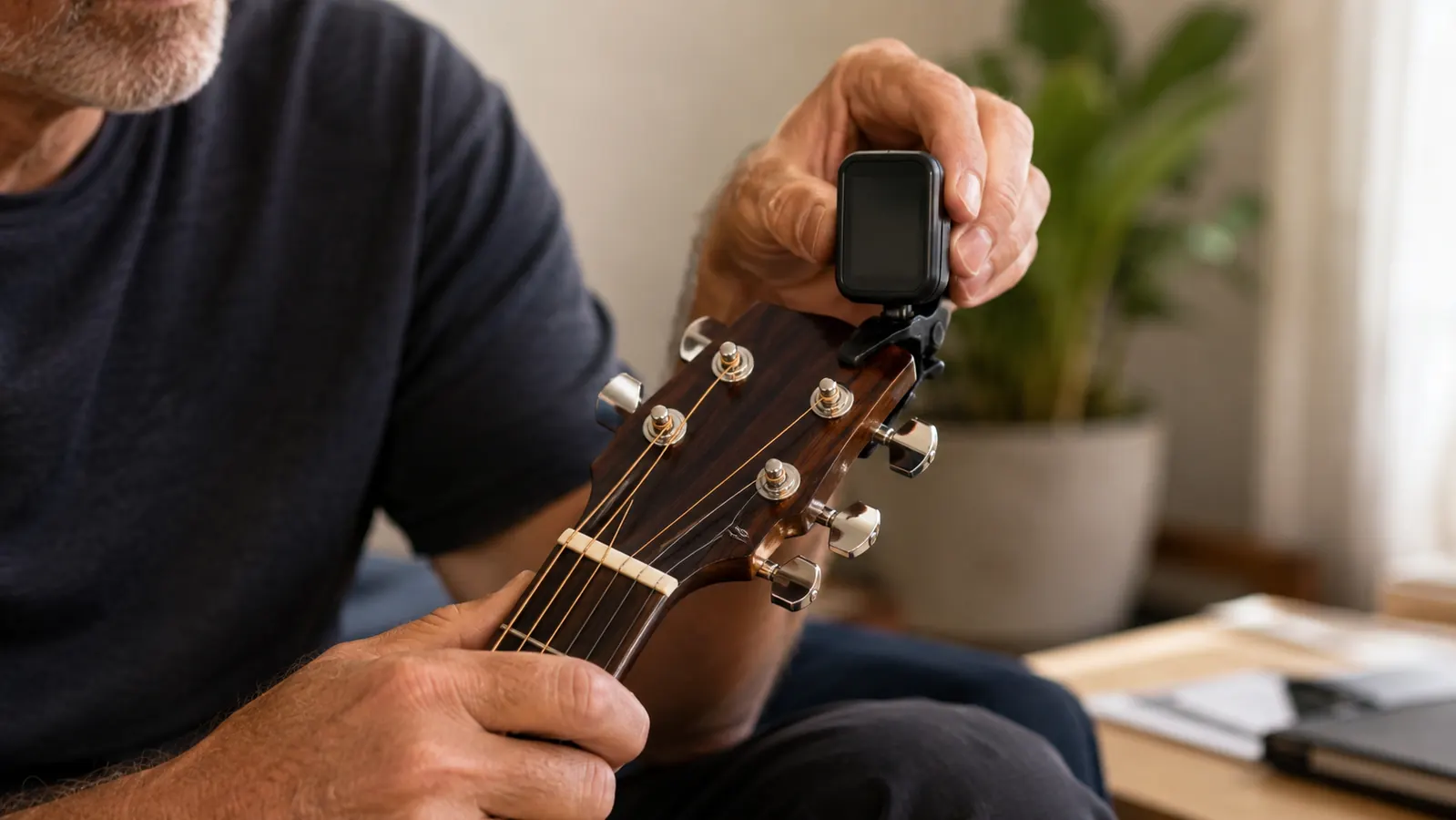
Students arrive tuned maybe half the time. The rest walk in with strings that fought them on the way to my door. A phone app in a noisy room struggles to hear a plucked string over the buzz of other kids warming up. Clip-on tuners don't listen to the room. They read the vibration of the wood itself, so a classroom full of chatter doesn't matter. You clip it on, pluck, and the instrument is in tune before the student's coat is off.
It Doesn't Care What Instrument You Hand It
My studio sees guitars, basses, ukuleles, mandolins, violins, and a cello once in a while. The SN-8 tunes all of them. Phone apps ask what you're playing, and woe to the family who gets it wrong on the menu screen. The clip-on just shows you a note name and a needle. Families with two instruments in the house need one tuner, not two. 'All instrument' is on the box, and in this case the box is telling the truth.
It Leaves a Hand Free for the Actual Tuning
You can't tune a violin with one hand and hold a phone with the other. Clip the tuner to the scroll, pluck with one hand, turn the peg with the other. Same for mandolin, same for ukulele. Even on guitar, where a phone could sit on the floor by your foot, the clip-on keeps both hands on the instrument, which is where they belong. Tuning should be a physical habit, not a juggling act.
It Teaches Students to Tune Themselves, and That's the Real Lesson
The biggest week in a beginner's first month is the one where they stop holding the guitar out to me and start fixing the string themselves. A tuner that works in thirty seconds makes that week come fast. A student who can tune is a student who can practice alone, and a student who can practice alone is a student who is still around in month six. That's what actually saves lessons, in the long run. The tuning is the visible part. The independence is the point.
It Survives Gig Bags, Falls, and Car Heat
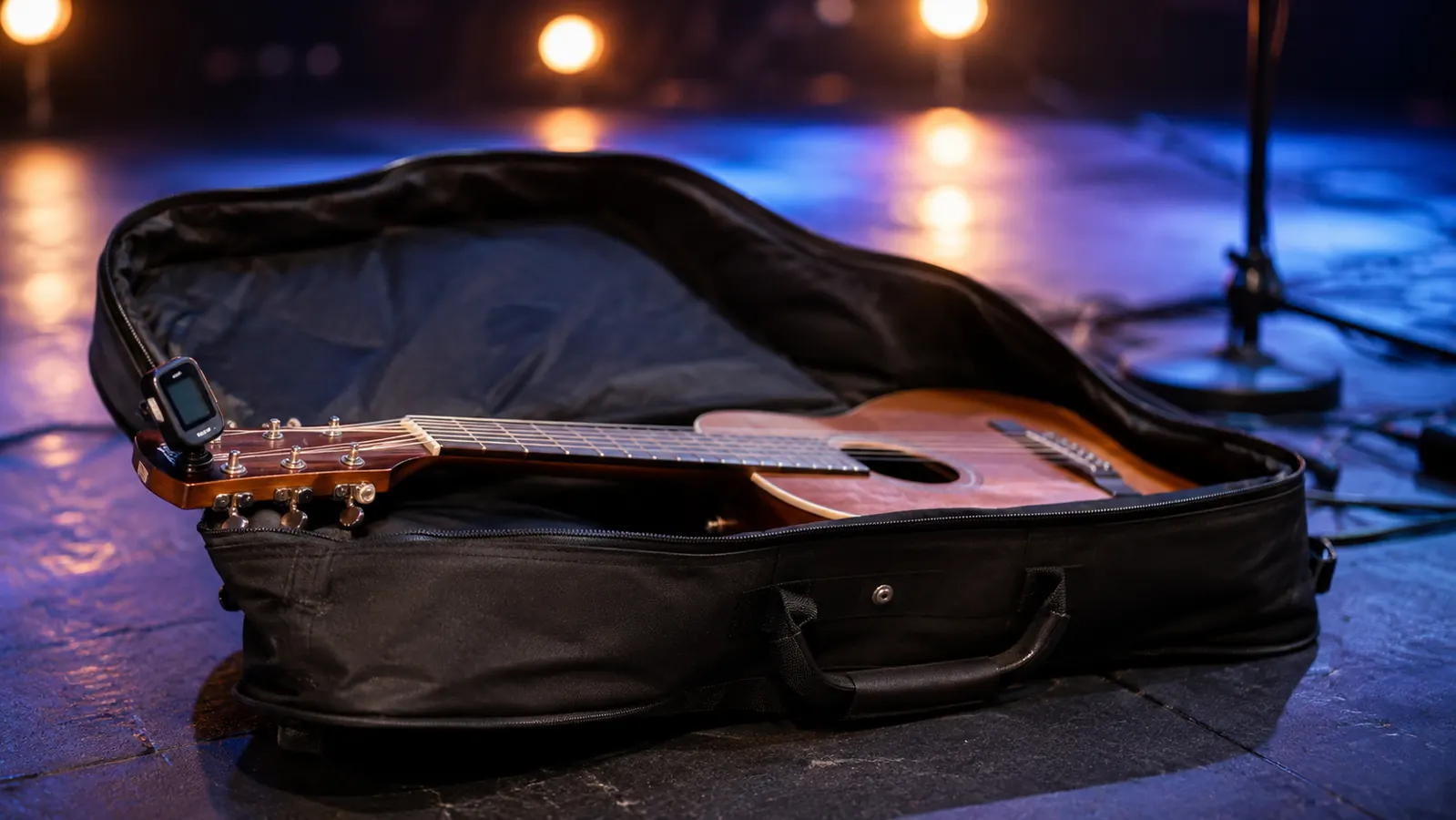
I've dropped tuners on concrete, left them clipped to headstocks in cars through a summer, and watched them bounce around in a gig bag for years. The SN-8 takes every bit of it. It's the single most-abused piece of gear in my studio, and the older ones in my drawer still light up the day I reach for them. Compare that to the phone that's one cracked screen away from becoming a very expensive tuner.
It Tunes Quietly, Which Is a Bigger Deal Than It Sounds
I had a viola student whose home practice happened after her little brother went to bed. She couldn't play a note loudly enough for a phone app to hear without waking him. The clip-on reads the instrument itself, no sound needed, so she could tune in silence and then practice in silence. For anyone practicing in an apartment or a shared house, quiet tuning is the difference between practicing and stalling out.
It Gives the Same True Pitch Every Time
An out-of-tune instrument plus an app that guesses wrong is how a student ends up playing flat for two months without knowing it, because every note matches the same wrong starting point. The clip-on holds a true reference, concert A at 440, every time. When every string is tuned to the same absolute pitch, chords finally sound like chords. That's not a luxury. It is the entire game.
It Turns the Family-Gathering Song Into a Win
Every parent has handed a guitar to a kid in front of relatives and hoped. If the guitar is out of tune, that moment dies quietly, and the kid doesn't try again soon. A clip-on in the case means the kid can tune it themselves in the car on the way over, before the audience is even watching. Confidence gets built in small moments exactly like this one, and the tuner is the difference between a good one and a painful one.
A Note Name Teaches More Than a Green Light
Phone apps flash colors. The SN-8 shows a note name and a needle. That feels like a small thing until you're teaching a seven-year-old, who looks at the little screen, says the note out loud, and turns the peg the right direction. Reading note names while tuning is the tuner paying for itself twice, and it quietly reinforces the same notes they're meant to be learning anyway.
It's the Spare You Should Never Need
I keep a second SN-8 in my gig bag, because a tuner is only useful until the one in your hand stops working. The SN-8 runs forever on a battery and has an auto-off I've stopped thinking about, which is the highest compliment a teacher pays a gadget. When something finally dies mid-set, having a spare the size of a matchbox in the bag turns a disaster into a non-event.
What I'd Skip
I'd skip the cheap no-name clip-ons that show up in two-packs, because the ones that have come through my studio share one problem: they lie. The needle settles in the center when the string is still flat, and a beginner trusts what the screen says. That's worse than no tuner at all. I'd also skip making the phone app your first-string plan in a busy room, because that's the crowd your kid's lesson actually has. One honest tuner beats a pocketful of guesswork.
If you want the two-year verdict, my full review of the SN-8 digs into how it holds up in a working studio, and I broke down the exact tuning routine I teach in my guide to tuning a guitar in seconds. For most families, though, the reasons above are the whole argument: a clip-on tuner isn't a gadget, it's the first thing that makes the lesson work.
A student who can tune is a student who can practice alone, and a student who can practice alone is the one still in lessons in month six.
Put One in the Gig Bag Before the Next Lesson
The Snark SN-8 is the tuner I've bought again and again, for my studio and for students' cases. One small tuner, every instrument in the house, and a lesson that starts in tune.
Amazon Check Today's Price on Amazon →