
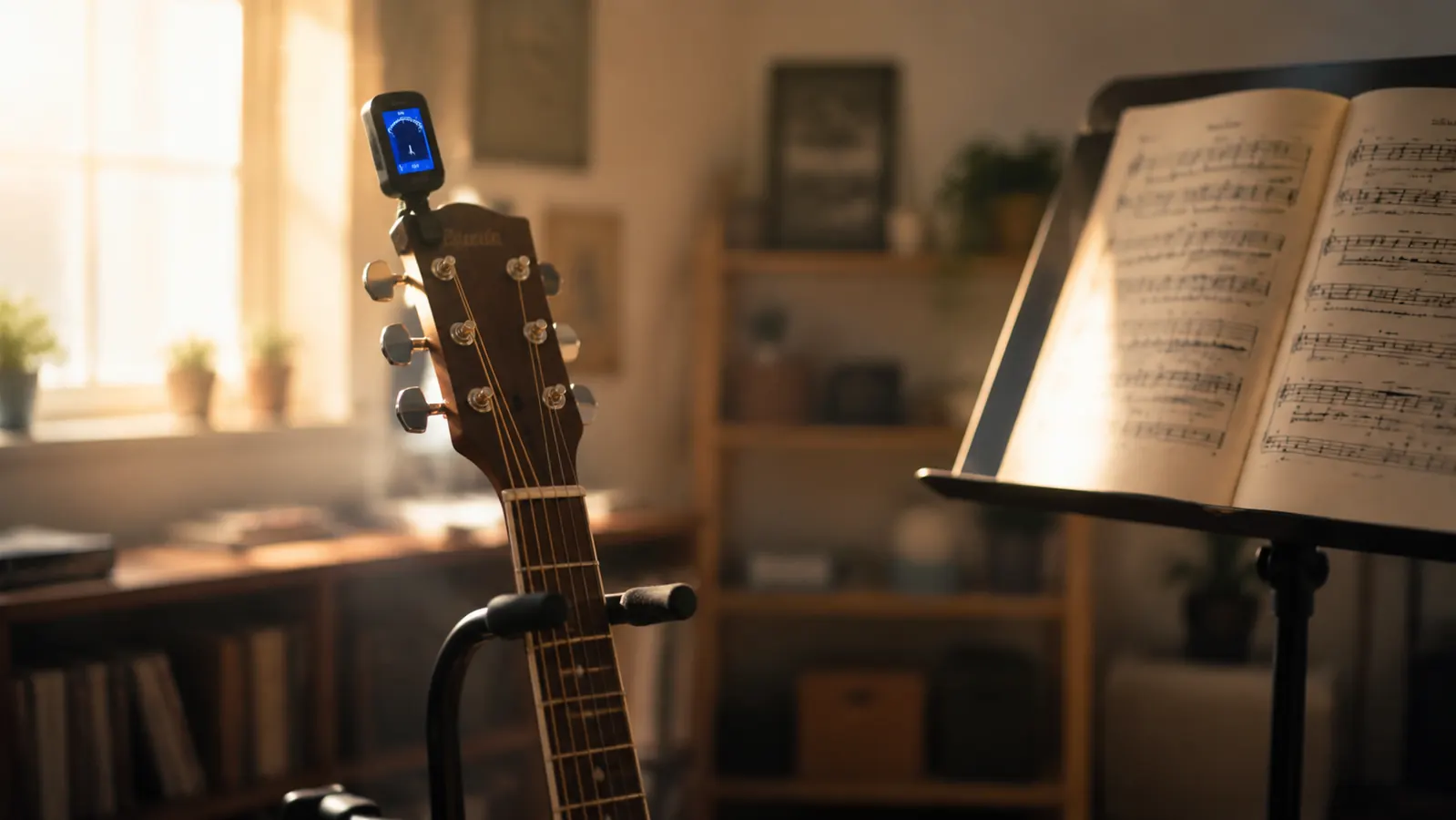
Clip-on tuners are the most borrowed thing in my studio. Students run through them like guitar picks, and over two years of lessons, rehearsals, and the occasional dropped tuner, two models have stayed on my desk: the Snark SN-8 and the D'Addario Nexus 360. If you've been to a school recital, you've seen the SN-8 clipped to half the headstocks on stage. The Nexus 360 is the newer, rechargeable challenger that a growing number of my gigging friends swear by. They look like direct competitors, and in a way they are. They're also built for two different people.
The short answer: if you're buying a tuner this week, get the SN-8. It costs less, its clamp holds on anything, and it tunes in seconds out of the box. The Nexus 360 is the better tool for someone who tunes at gigs every weekend and is done feeding a tuner coin-cell batteries. Neither is a bad buy. One of them is just the better first buy, and the other is the better upgrade.
| Snark SN-8 | D'Addario Nexus 360 | |
|---|---|---|
| Price | Costs less; the classic budget pick | Costs more; the premium pick |
| Battery | CR2032 coin cell, changed every few weeks of daily use | Rechargeable via USB, goes weeks per charge |
| Clamp | Super tight clamp holds any headstock | 360-degree rotating clamp, gentler and smoother |
| Display | Big color display, readable from a few feet away | Auto-rotating color display, stays upright at any angle |
| Metronome | Built-in tap-tempo metronome | Built-in metronome as well |
| Durability | Ball joint is the usual break point when dropped | Feels more solid; survived my rehearsal floor |
| Best for | Students, first tuners, and teachers | Gigging players who tune in the dark |
Why a Clip-On Tuner Beats a Phone App
Before we get to the two of them, the question every parent asks me: why not just use a free app on the phone? In a quiet room, an app works fine. My studio is never quiet. The piano next door is going, another student is warming up, and a phone microphone hears all of it. A clip-on tuner ignores the room entirely because it reads vibration directly off the instrument, not sound. Clip it to the headstock, pluck a string, and the note is right there while the room stays as loud as it wants to be.
There's a second reason I steer students away from apps: the phone stops being a tuner the second a text lands. A clip-on tuner sits on the music stand between songs, never gets locked, and never runs out of charge in the middle of a lesson. For a kid who needs to tune three times in one practice session, that consistency is the whole job.
How I Use Both in a Week of Lessons
On Monday mornings my group ukulele class runs on three SN-8s passed around the room. The clamp matters there more than anywhere else, because those plastic ukulele headstocks are thin and slippery, and a lot of clamps sit on them at an angle and never fully settle. The super tight clamp grabs a half-size instrument the same way it grabs a full-size one, and a kid who can't get the tuner on is a kid who isn't tuning. The SN-8 makes that part automatic, and automatic is what you want when you're teaching ten students at once.
By Thursday the studio is full of the older kids and the tuner on my own desk changes. I reach for the Nexus 360 for my own playing because it goes weeks on a charge and I'm not always near a spare coin cell. At a gig I'll hang it upside down from a mic stand so the whole band can glance at it, and the auto-rotating display keeps the readout level no matter how it hangs. That's the feature you stop noticing when it's there and start cursing when it isn't.
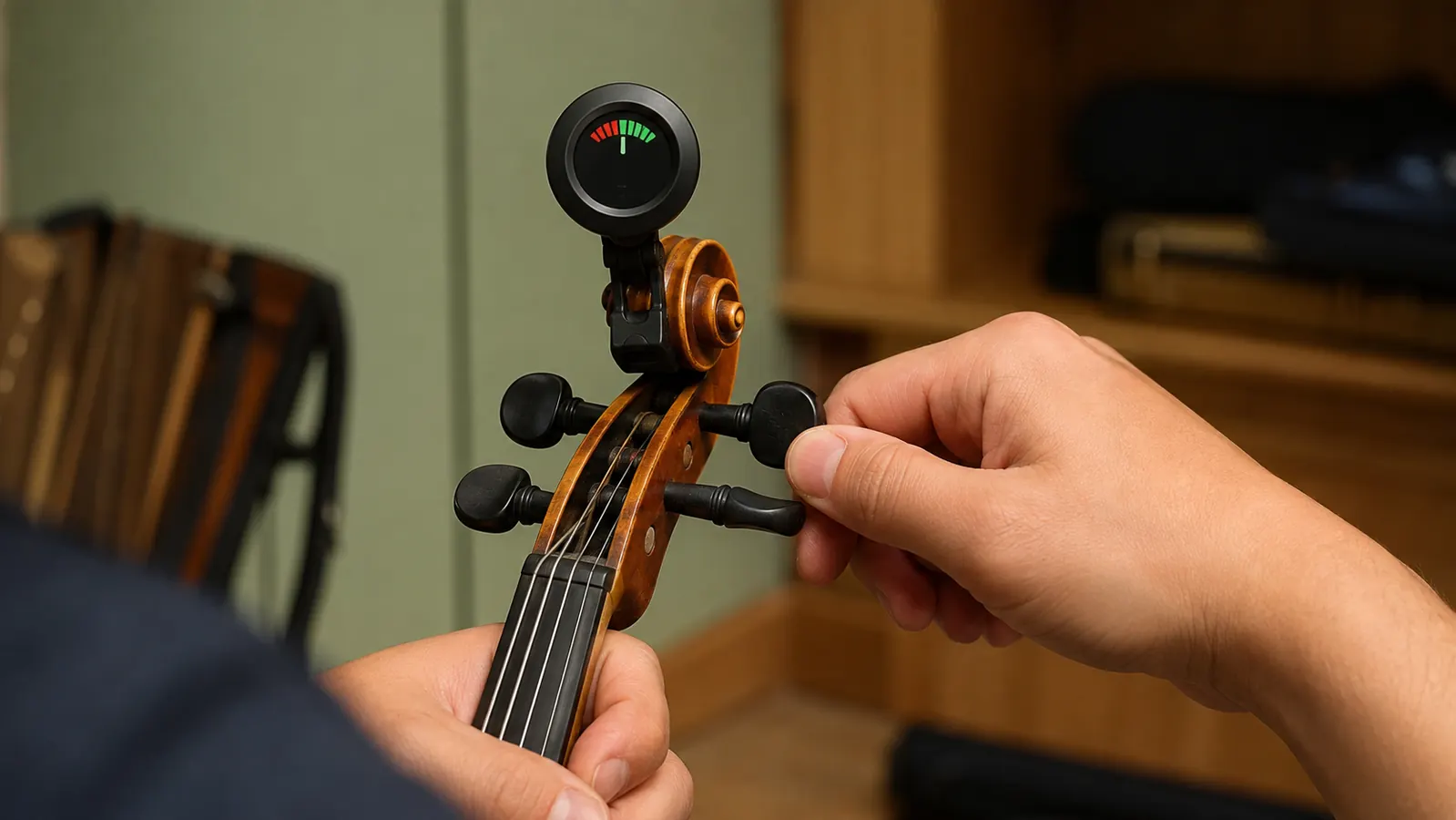
I've clipped both onto everything students bring in, and the clamps feel different. The SN-8's super tight clamp grabs a thin ukulele headstock or a thick bass headstock with the same hold and stays put through a lesson. The Nexus 360's clamp is gentler and rotates onto a violin scroll or a capo'd guitar at the angle you need, but on a slick plastic ukulele head it can work loose. Neither is wrong. They match different instruments and different hands.
Where the Snark SN-8 Wins
Start with money. The SN-8 is the tuner I can hand a beginner without thinking twice, because it costs less than a lot of the accessories already riding in a student's bag. You will drop it, loan it, and eventually lose it, and replacements are cheap enough that none of that stings. For a parent buying a first tuner for a kid who may or may not stick with the instrument, that is the kindest possible price behavior.
Then there's the clamp, the thing the name brags about and the thing it genuinely earns. The super tight clamp grabs a half-size ukulele headstock and a thick electric bass headstock with the same confidence, and it does not move once it's on. In a group class I clip an SN-8 on and pass the instrument around; the clamp is why the tuner is still there at the end of the hour. The display is big and color, readable from across a practice room, and students who've used five other tuners before landing here all say the same thing: they can finally see the needle. Snark has shipped millions of these things for a reason.
There's also the fold-down trick that keeps the SN-8 alive in a school bag. The whole head folds flat against the body, so the display and the ball joint stay protected instead of sticking out and taking hits on the way to the practice room. Students who leave the tuner clipped on between sessions need reminding to take it off, because it fits so well on the headstock that it looks like part of the guitar. That is not a complaint.
Where the D'Addario Nexus 360 Wins
The battery is the honest difference. The SN-8 runs on a CR2032 coin cell, and with daily use I'm swapping them every few weeks. The Nexus 360 charges over USB and goes weeks on a single charge, which means no drawer full of coin cells and no tuner that dies thirty minutes before a concert. If you've ever opened the battery door on an SN-8 at the worst possible moment, you know exactly what this section is about.
The display on the Nexus 360 is the other real upgrade. The whole face rotates, so the number stays upright no matter how the tuner sits on the instrument. Unclip it and mount it on a violin at an odd angle and the readout flips itself level. The body also feels more solid in the hand than the SN-8's ball joint, and it has survived the drops in my rehearsal room that have killed tuners before. D'Addario built it like a piece of gig gear, and it feels like one.
One more thing the rechargeable battery quietly buys you: you can leave the Nexus 360 on charge by the door the way you charge a phone, so the tuner is never the thing holding up a rehearsal. I have walked into a session, found my SN-8 blinking on its last coin cell, and borrowed a student's instead, not once. The USB charge on the Nexus has ended that for me. For a teacher, that convenience is worth the price difference more than any spec on the box.
The tuner I clip on forty times a week
For a first tuner, a spare, or a gift for a student who's always playing flat, the SN-8 is the one I reach for first. Big display, super tight clamp, and a price that makes the spare easy to justify.
Amazon Check Today's Price on Amazon →The Case for Owning Two
Here's the buying move I actually make: I keep one tuner in each gig bag and one on the studio shelf, and two SN-8s run about the same as one premium tuner. That math quietly favors the SN-8 for anyone who teaches, because a tuner that is not on the instrument you're holding is a tuner that isn't doing anything. A cheap spare is a working spare.
A spare also changes how kids treat the thing. They know a borrowed tuner is replaceable, so they stop babying it and just tune. I'd rather a student tune boldly on a cheap tuner than pretend they're fine and play an instrument that's a half step off. Snark's cheap-and-cheerful reputation is exactly the point here.
Screen Legibility in Daylight and on Stage
Outdoor and stage light is where the two displays stop being a wash. In a practice room the SN-8's big color screen is the easiest to read of anything I own. Point it at direct sun and the color LCD washes out, so you tilt the head until the glare passes. The Nexus 360 runs brighter in the dark. Most kid recitals and cover band sets happen under stage light or in a gym with the house lights off, and that brightness shows up.
Hanging straight off a headstock, both read level until the instrument goes sideways in your hands. The SN-8 forces you to flip its head around to a workable angle. The Nexus 360 turns its own display, so it stays level in the dark, clipped sideways on a violin, or hanging upside down from a mic stand. That is the difference between a quick glance mid-song and pointing the guitar at the ceiling to see it.
Calibration and Alternate Tunings
Both tuners cover the tuning jobs most players run into. Calibration modes shift off A440, which matters for a wind ensemble matching a piano a few cents off, or a band matching an electronic keyboard. The bigger everyday feature is transposition: set either unit for a capo at the second fret or a drop-D song, and it stops insisting 'this is an E' when you are aiming for a D. I walk students through it the first time a song needs it, and both handle it in three button presses.
What to Watch For on Both
Neither is perfect, and a teacher owes you the honest list. On the SN-8, two things wear out: the battery door, which is the weakest part on the whole unit, and the rotating ball joint, which is where most of my drop damage has landed. Treat it gently and it lasts for years; drop it onto a concrete floor and you'll know why I keep spares. The Nexus 360 costs meaningfully more, and for a beginner's first tuner that extra money buys features a kid won't use yet. It's also a slightly bigger lump on the headstock, which matters more on a small violin or a ukulele.
One thing neither suffers from is a slow response. Both tune a string in two or three seconds, both handle guitars, basses, violins, violas, cellos, ukuleles, and more, and both have a built-in metronome for the student who wants to practice with a click. I have not had a student fail to tune with either one on the first try, and after hundreds of first tries, that's the stat that matters.
Which one survives a lesson bag is not what parents ask, and it decides the expense. The SN-8 folds flat, so in a school bag it takes hits on the folded body rather than on the neck joint, and its weak points are cheap to replace if it ever dies. The Nexus 360 is the one I reach for in my own bag, but slower to hand to a student: a parent ferrying a violin case and a stack of binders is likelier to knock it off a table or leave it on a riser. The cheap tuner is the durable one, not because it is built stronger but because nothing about breaking it stops the week.
Who Should Buy Which
Buy the SN-8 when the tuner is for a student, a beginner, or a spare. It's the right price, the display is the easiest to read, and the clamp will hold anything a kid brings to a lesson. Buy the Nexus 360 when you're the one tuning, you play out at least a few times a month, and you're tired of buying coin-cell batteries for something you use ten minutes before you go on. It is the better daily driver for a working player.
And the honest closing: both of these tuners will keep a guitar in tune, and either one is better than the first tuner most of us owned. If you're buying one tuner this year, the SN-8 is mine, and it's the answer most of my teaching friends give too, which is how the Snark SN-8 became the default tuner in school music rooms. If you already own an SN-8 and you've read this far, you already know which one you're thinking about.
One last thing worth saying to the adults reading this: you don't have to pick one and defend it. A lot of my home practice is tuned with the Nexus now, and the SN-8s still do the heavy lifting in lessons, because that's the division of labor they're each good at. Buy for the job in front of you, not for the argument. Both of these are good tuners, and the person who needs a tuner this week is going to be happy with either one.
Still the SN-8 for me, and for my students
I've bought several across the years and I keep one in every gig bag in the house. Check today's price and grab one for your student, your kid, or your own headstock.
Amazon Check Today's Price on Amazon →