
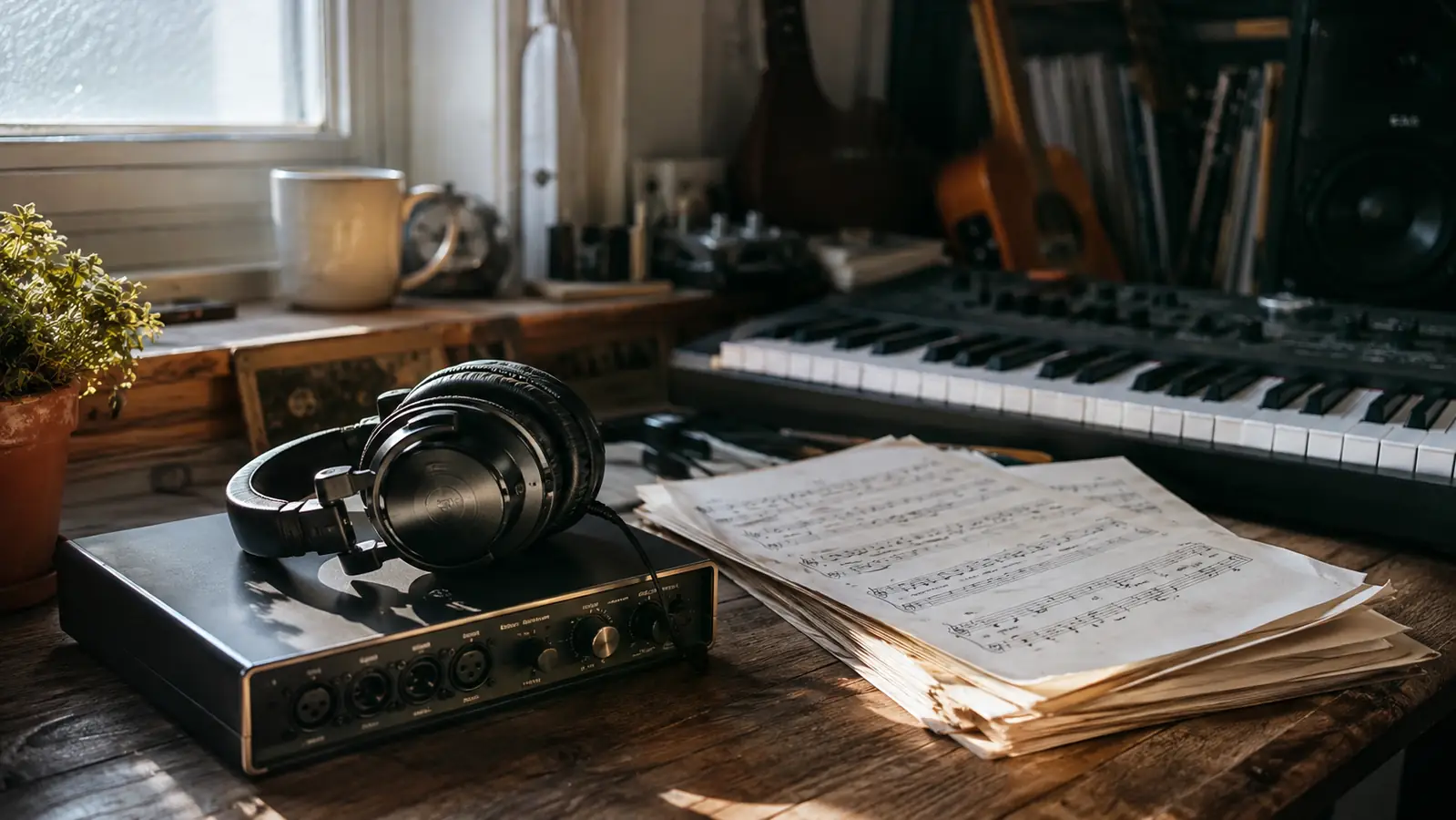
Sooner or later, every home studio owner buys a pair of open-back headphones. The praise is glowing: a huge soundstage, airy highs, speakers strapped to your head. Then you record your first vocal and hear the click leaking into the microphone, or you try to mix at midnight while someone sleeps one wall over, and you start to wonder who those headphones were made for. Open back sounds wonderful at a quiet solo listen. It is a terrible partner in a room where real work is happening.
I'm a music teacher first and a recording hobbyist second, and I buy headphones the way some people buy socks: in bulk, for myself and for students. Closed-back monitors are what I hand out, and the Audio-Technica ATH-M20x is the pair I keep going back to. Budget gear that does an honest job. If you wonder whether closed-back monitors are for you, here are ten reasons, with everything I've watched them survive in lessons and tracking sessions.
Hear the Track, Not the Room
The Audio-Technica ATH-M20x is the closed-back monitor I've bought again and again for my studio and for students' bags. Sealed cups keep bleed out of the mics and let you practice in silence.
Amazon Check Today's Price on Amazon →The Ten Reasons
It Keeps the Click Out of the Microphone
A live mic hears everything in the room. If you're tracking acoustic guitar or vocals while wearing open-back headphones, the click and the guide travel straight out of the ear cups and into the take. You never hear it while playing, but you spend the next evening carving it out of the take. The sealed back of the M20x traps that sound where it belongs, in your ears. It's the cheapest noise gate in your studio, and it works without touching a single setting.

It Shows You the Track, Not the Room
Open-back headphones let the room join the party. Reverb off the walls, the hum of your computer, your own breathing, all of it layers onto the signal, and you start judging a take that was never recorded that way. The sealed cup cuts all of that off, so your ears get the track, nothing more. When I'm judging whether a take is worth keeping, I don't want my garage pretending to be a vocal booth. The M20x gives me the track, plain and true, which is the whole job of a monitor.
It Turns Any Corner Into a Silent Practice Room
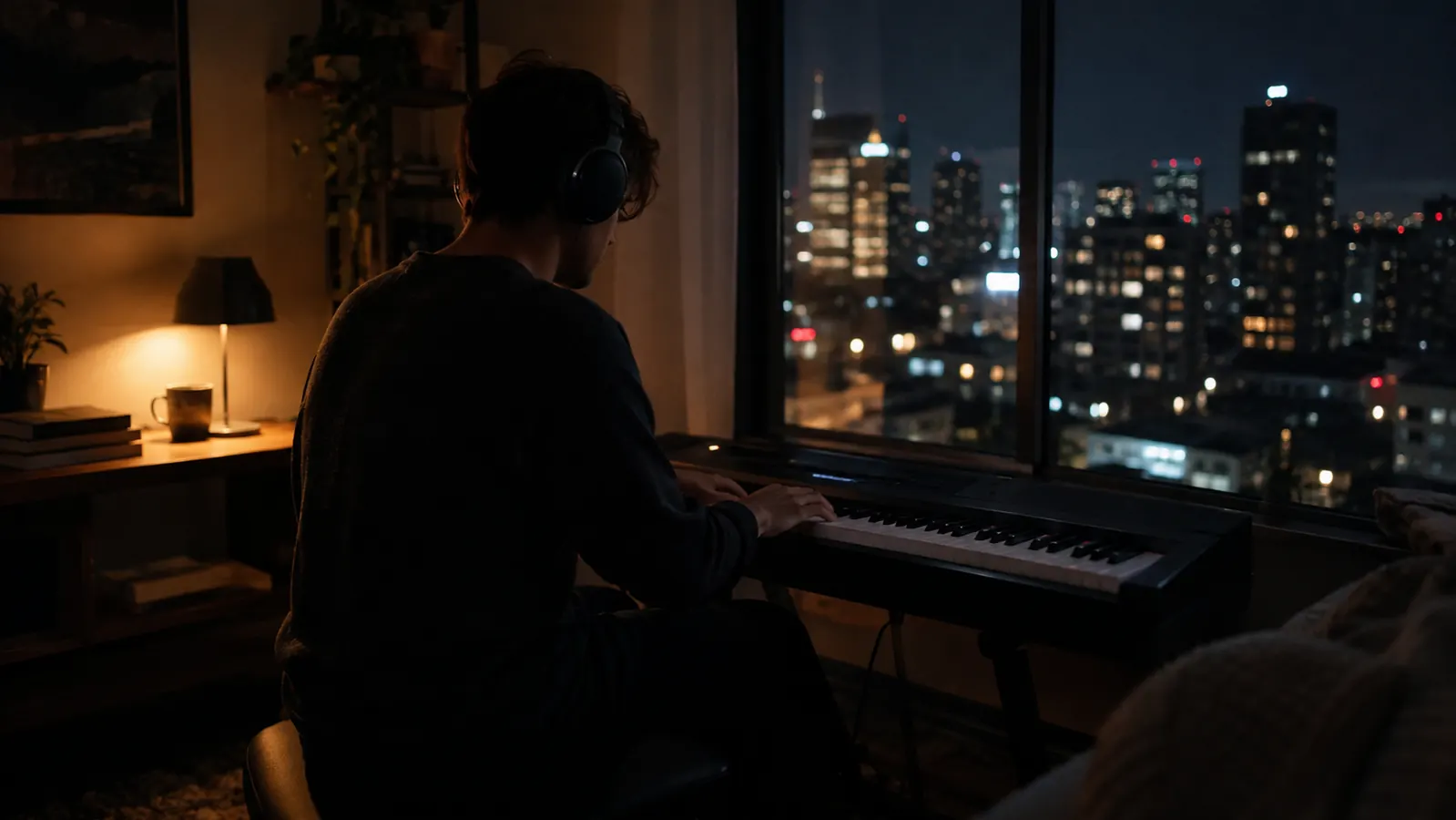
Half my students practice in apartments and shared houses. A digital piano through closed-back headphones is a full instrument at bedroom volume, and the next room never hears a note. Open-back cans defeat the point, leaking the sound back out into the room you were keeping quiet. For late-night practice, dorm-room lessons, and families with a baby asleep down the hall, the sealed cup is the entire reason the pair exists.
It Pulls the Detail Out of a Dense Mix
Closed-back monitors don't have the enormous stage of an open pair, and that's okay, because a stage isn't what you need when checking a mix. Sealed cups focus the sound and keep competing parts from smearing together, so it's easier to hear whether the bass is cutting or the snare sits where it belongs. The M20x stays honest through the midrange, the exact band where muddy mixes hide. You hear the problem, so you can fix it.
It Stays Comfortable Through a Long Tracking Night
I've sat through five-hour tracking sessions with students and never had to stop and resent my headphones. The M20x's clamping force holds the cups in place without squeezing your head like a vise, and the padding holds its shape hour after hour. Comfort is a monitoring feature, not a luxury. A pair that hurts after the first hour is a pair you'll take off, and a monitor you take off can't tell you anything about your mix.
It Survives Years of Studio, Van, and Backpack Abuse
I've watched students drop Audio-Technica monitors on concrete, bury them in gig bags, and leave them in cars through a summer. They swivel flat, fold small, and keep working. A pair that lives in a backpack and still holds its sound after two years is worth more than a fragile pair that sounds five percent better on day one. This is the pair I hand to the student hardest on gear, and it comes back just the way it went out.
It Blocks the Room While You Record a Vocal
When you're singing your tenth take, you don't want to hear the refrigerator, the neighbor's television, or your last chorus bouncing around the room. The sealed cup cuts the outside down to you and the headphones, so you can commit to a performance instead of waiting for a quiet moment that rarely arrives. The isolation also means less of your own voice comes back through the phones, so you hear the mix the way a listener will.
It Lets You Monitor Loud Enough to Really Sing
Every vocalist knows the trap. You need more monitor, you turn the headphones up, and the microphone starts to ring, so you drop the level and sing blind. That feedback begins with headphone sound leaking toward the mic. Because sealed cups trap the sound instead of spilling it, you can run the monitor loud enough that the singer genuinely hears themselves. Singers sing better when they can hear, and that shows up inside the first hour of takes.
The Low End Is Honest, Not Hyped
Consumer headphones flatter the bass because flattery sells. A monitor has the opposite job: show you what's actually there. The closed-back M20x keeps the low end tight and honest, so when a kick drum and a bass fight for the same space, you hear the collision instead of a pleasant thump. That honesty is why a mix checked on these translates to a car stereo or a club PA without surprises. Flattering headphones flatter your mistakes, and every mistake you don't hear comes out later.
It's the Working Player's Best Value for Money
I've bought a lot of headphones in fifteen years of teaching, and the M20x is the pair I keep returning to. You don't need to spend a fortune to get a monitored sound that tells the truth. The sealed-back design, the honest response, and a build that outlasts a backpack do the job that matters, at a cost that makes it reasonable to own two, one for the studio and one in the gig bag. That is what value looks like to a player whose budget covers a dozen other purchases.
What I'd Skip
I'd skip open-back headphones as a first pair if you record anything with a microphone, and I'd skip the earbuds students show up with, because a mix checked on them is a mix you'll be surprised by later. If your listening is private and your room is dead quiet, open back makes a fine second pair, just not the workhorse. Closed-back is the monitor that can do the job all day, every day.
For the long-term verdict, my full review of the Audio-Technica ATH-M20x digs into how a budget monitor holds up under daily use, and I put together the exact silent practice setup I teach in my guide to practicing quietly. For most musicians, the reasons above are the whole argument: closed-back monitors aren't a purist's preference. They're the pair that actually works in a real room.
Flattering headphones flatter your mistakes. A monitor that tells the truth is the pair that makes your mixes translate.
Give Your Ears the Honest Pair
The Audio-Technica ATH-M20x is the closed-back monitor I buy in threes, for my studio and for students. Sealed cups, honest low end, and comfort that survives a long tracking night.
Amazon Check Today's Price on Amazon →