
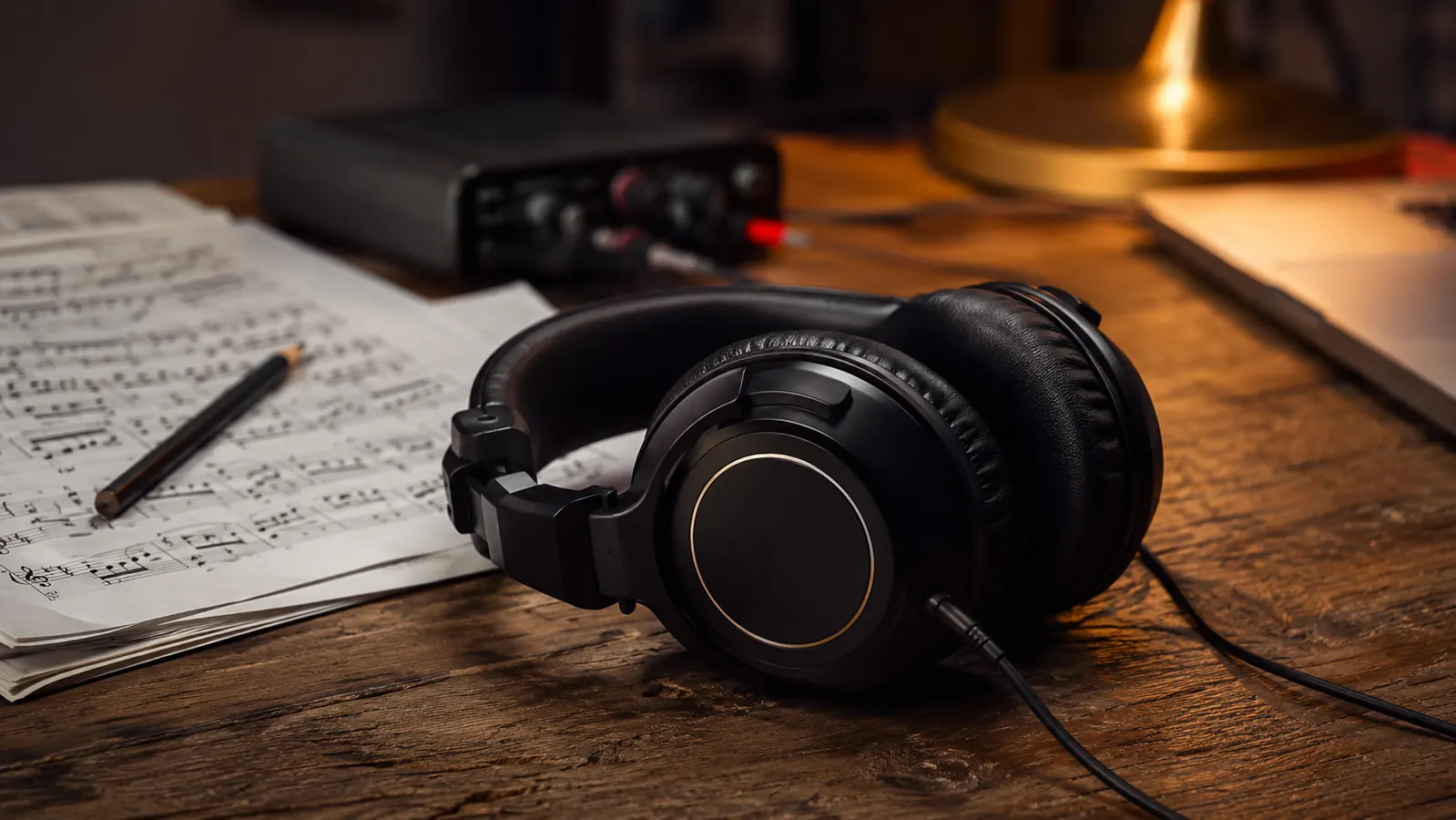
Somewhere around every music teacher's desk sits a pile of cheap headphones that fooled us once. The gaming headset with the exaggerated bass that buried the piano track. The earbuds that let the metronome bleed into the room and wake the whole house. Spend a few years teaching and you learn to stop trusting what a headphone promises and start trusting what it still does after a thousand hours of wear. That is the standard I bring to the Audio-Technica ATH-M20x, the budget monitor pair I have owned since 2024 and worn through nearly every lesson and practice session since.
This is a long-term review in the truest sense, because the pair on my desk right now has been through two school years, about four hours of wear on an average day, and something like six student borrowers. Drummers, a piano student learning on her own at night in an apartment, a first-time recording student who had never touched a timeline in his life. The cans have been dropped, pulled off heads, and hung from mic stands, and they still sound the way they did the day I unboxed them. That is the story the ATH-M20x deserves, and it is the one I am going to tell you here.
The Quick Verdict
The most honest-sounding budget monitoring pair I have used in two years of daily teaching, with a fixed cable and no case as the price of admission. I keep buying them for the studio.
Amazon Check Today's Price →Stop Buying Headphones That Lie to You
The ATH-M20x is the pair I reach for on a normal Tuesday and the ones I hand a student who needs to hear what they actually played, not what a bass boost wishes they played. Check today's price on Amazon and see why this budget monitor keeps winning the desk.
Amazon Check Today's Price on Amazon →How I've Used Them
For the last two years the M20x has been the default pair in my studio. I record lesson playbacks, edit student takes, and monitor while students play. Average wear runs about four hours a day across the week, more on gig weekends when I take them to the practice room and park them on my own head for the whole rehearsal.
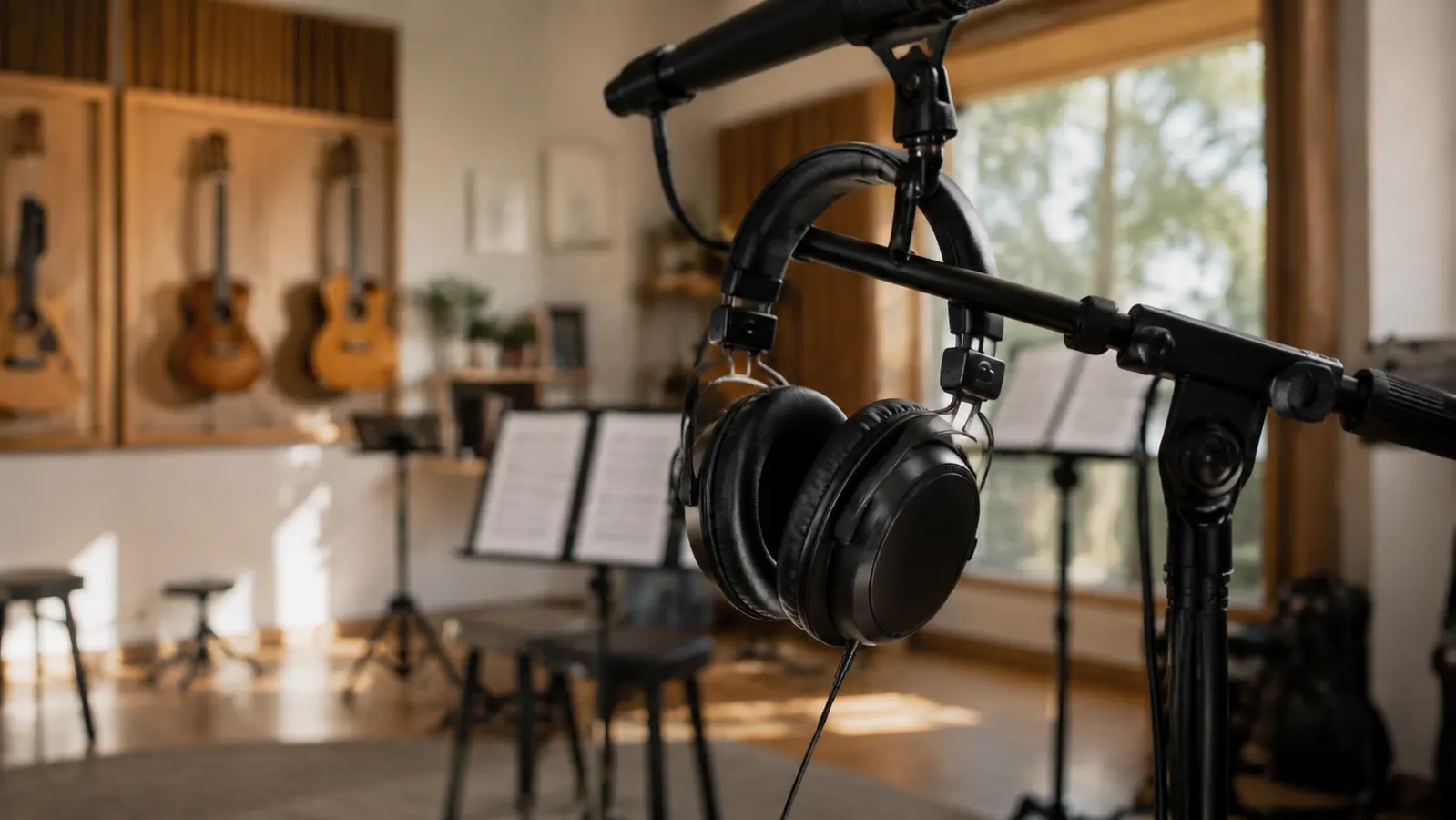
They live on the desk top, not in a case, because the box does not include one. That is the first thing you learn to forgive, and it stops mattering once you watch what they survive. Half a dozen budget rivals with detachable cables and padded bags have come through here in the same two years, and the ones still working are the ones resting in this drawer. The M20x did not need a bag to stay alive.
Impedance of 47 ohms and sensitivity of 96 decibels means they are easy to drive from anything. A phone, a laptop, the headphone jack on an Alesis Recital or a Scarlett Solo, all of them run the M20x at healthy volume with no extra amplifier. In a teaching studio where students plug into whatever is at hand inside the first minute of a lesson, that convenience is not a detail. It is the entire point.
The fixed cable, since you will read a lot about it, runs about three meters and ends in a 3.5mm plug with a screw on 1/4 inch adapter in the box. That one cord covers a phone, a laptop, and a guitar amp, which is the full list of things a student plugs into. I mention it early because it is the single most discussed feature of this headphone, and it deserves straight talk.
What the M20x Actually Sounds Like
The M20x is a warm headphone. It is bass heavy, emphatic in the low mids, with the top end rolled off well short of a really bright pair. Where the M40x and M50x reach up toward 24 kHz, the M20x calls it a day around 15 kHz. That tuning makes it slightly dark, never harsh, and exactly the kind of voicing that stays comfortable for a whole evening of practice without fatigue.
In a lesson that voicing means something specific. When I play a C7 chord on the digital piano, the root C at 32.7 Hz is genuinely present, not a rumble, and that is the whole job of a monitoring headphone at this level. Vocals sit slightly forward rather than scooped back, so a student hearing their own take through the M20x hears their actual performance. The tuning is classic Audio-Technica monitoring character: honest in the registers that matter most to a learner.
Where I reach for the M20x in teaching is playback after a take. A student who has just recorded four bars of scales hears exactly how their timing sat, through a voicing that makes the low end legible without flattering it. That is the difference between monitoring and entertainment, and the M20x sits firmly on the monitoring side of the line.
Two Years, Four Hours a Day
The parts that die first on cheap headphones are the earcups and the clamp. After 24 months the M20x pads are still light, they do not squeeze, and students of every head size have worn them for full hour lessons without the wince I see on plenty of pricier pairs. My own ears do not ache at the end of a long recording day, and for a teacher that comfort is worth more than any frequency graph.
At the two year mark I ran a driver balance check with a student helper, test tones at 1 kHz and then 2 kHz through each side. Left and right matched within about half a decibel at both frequencies. That is not a thing I can honestly say about most budget headphones I have owned in my teaching life; most of them drift to one side within the first year.
A small thing two years reveals: the pads have held their shape, no hardening, no cracking, and the headband foam has not flattened onto the metal. Cheap pairs flatten and start aching behind the ears around month nine. These simply have not, which tells me more about the build than any warranty line in the box.
The pads rotate about 90 degrees, which is enough for table listening when two students share one pair for a playback, but not 180 and not fold flat. The limitation is real and I will come back to it. Nothing has cracked, nothing has creaked, and the padding has not shed a fleck in two years of daily student abuse.
After two years and six borrowers, the left and right drivers still match within half a decibel. That is the sentence that explains why I keep buying these.
The Passing of the Cans
The story I will actually remember about the M20x is not a spec sheet. It is the loan pairs. I have handed out at least six pairs to students in two years. Only one came back with a problem, and that was a headband screw I tightened with a coin in ten seconds.
Adams, a 20-year-old drummer who works night shifts, borrowed a pair for silent drum practice, an hour a night on a Roland with the volume down. He is right handed at the kit and left handed for fine motor work, and he lives with a full traumatic grade 1 kidney, which matters here because an hour of thumping practice is the last thing his body needs if the headphones make him tense. They never did. Mid year a second Adams took over the same loan pair and put another six months on it.
Chun-Wei, a 27-year-old exchange student from Malaysia, borrowed a pair for his very first recording session. He had never played or recorded anything before. His first take had a repeated wrong note in the bass line, he heard it in the phones on take one, and he nailed the part on take two. When he put the M20x up against the studio monitors on his desk with a kick drum sample, he could not tell them apart. That is not a scientific test, but it is the most honest one I know.
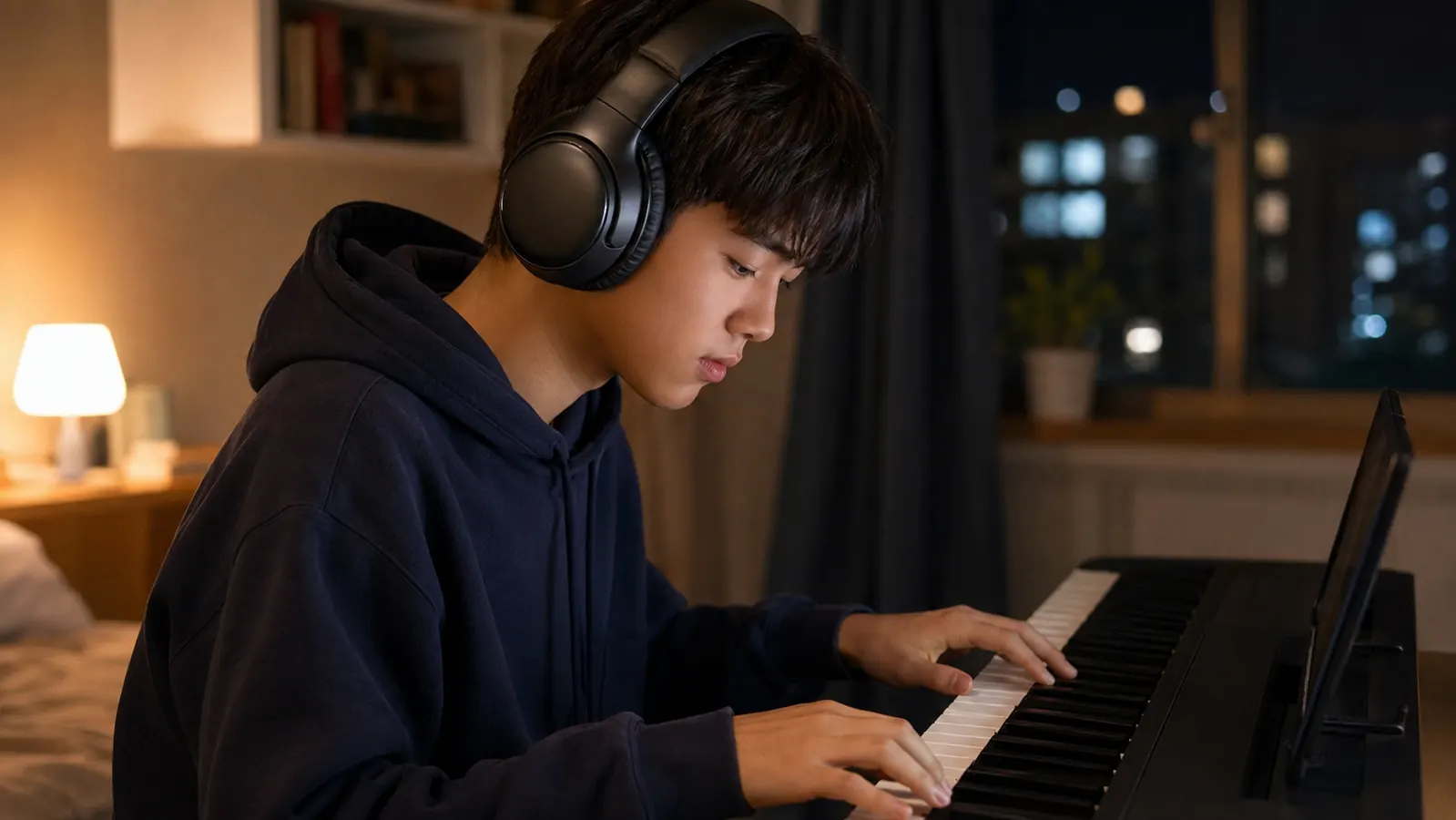
And Elizabeth, the overnight front desk worker in Ottawa who taught herself piano at night in her apartment. I lent her a pair and she bought her own within the month, the same pair she still carries to lessons, and the exact setup I lay out in my guide to practicing quietly. The M20x is how she practiced at midnight without waking her neighbors and how she heard her own recorded takes for the first time. It is also how she fell in love with recording, and she will tell you that herself.
One of the six loan pairs never made it back, permanently claimed by a student who forgot it twice and then admitted the truth. I have counted that as the strongest possible review a budget headphone can receive.
What I Liked
- Warm, honest voicing that stays comfortable over a four hour session
- Earcups remain light and pressure free after two years of daily wear
- Easy to drive from any phone, laptop, or interface jack with no amp
- Survives student life: six borrowers, drops, and weekly plugging
- Drivers still matched within half a decibel at 24 months
Where It Falls Short
- Cable is fixed to the housing with no detachable spare
- Pads rotate 90 degrees but not 180, and they do not fold flat
- No case or bag in the box
- No inline mic, so phone calls mean switching to another pair
Where the M20x Cuts Corners
Now the honest half, because this article would be doing you a disservice otherwise. The cable is fixed, roughly three meters of cord permanently attached to the left cup. It has caught on my desk drawer handle more times than I love admitting, and once it pulled clean out of the audio interface mid take, which startled a full room. Brush the cord against a table edge and you will hear a little microphonic noise, the price of a hardwired cable at this budget.
There is no bag, no inline remote, and no folding joint, so the M20x travels like a small appliance and handles a phone call by coming off your head. For a student desk pair I have decided all of it is fair trade, because the sound and the comfort win, and the black pair still looks close to brand new after 24 months. But you deserve the tradeoffs named plainly, and there they are.
For fairness, the phones in that drawer deserve naming too. The M30x from this same family adds a detachable cable and a touch more top end clarity for a higher price, and the M40x is clearly better still, which is exactly what my honest review of this line explores in detail. The Sennheiser HD280 tunes brighter with a stronger clamp, and the Sony MDR-7506 is the studio classic but needs more volume to drive. All of them are fine. None of them has lasted at this wear rate in my studio, and today's price on the M20x is what finally settles the argument for me.
Who This Is For
The M20x is for the person who practices at a laptop, a digital piano, or a drum kit with the volume turned down and wants to hear their real sound instead of a gaming set's cartoon bass. It is for the parent buying a first serious pair for a kid in lessons, because it takes student abuse and keeps sounding right for years. It is for the beginner sitting down to record their first take and needing to hear their own mistakes clearly. Every one of those people has walked out of my studio with a recommendation for this pair, and the closed back is precisely why it suits them, something I go deeper into in my guide to why musicians need closed-back monitors.
Who Should Skip It
Skip the M20x if you commute with your gear and need cans that fold flat or tuck into a case, because these travel like a small appliance. Skip it if you need one pair that also handles phone calls, since there is no inline mic. And if you mix for a living and live on the extreme top end, the rolled off treble will send you up the Audio-Technica line to the M30x or M40x instead. The M20x is a monitoring workhorse, not a mastering microscope, and knowing the difference is what separates a great buy from a frustrating one.
The Pair That Paid for Itself in the First Month
Two years, four hours a day, six borrowers, and the drivers still match. The ATH-M20x is the budget monitoring pair I recommend to students and fellow teachers alike, fixed cable and all. Check today's price on Amazon and see for yourself.
Amazon Check Today's Price on Amazon →