
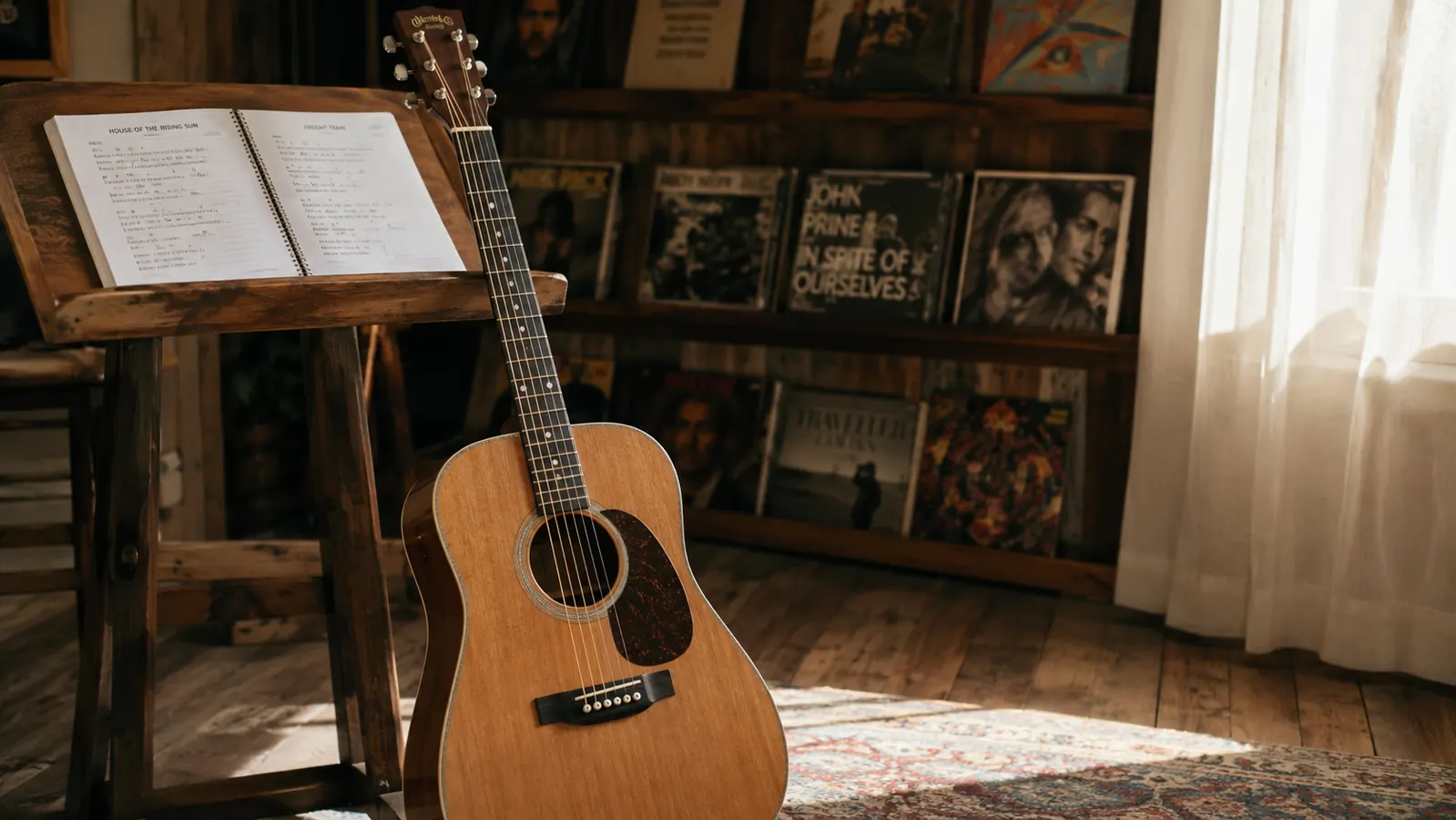
Every September, a parent walks into my studio with a kid and one question: what guitar should we get them? Half the time their phone is already open to the cheapest acoustic on the internet, a box special that looks great in the listing and fights the player from the first chord. I have been teaching guitar for nearly twenty years. I have bought student instruments by the handful, set them up, restrung them, and stood beside parents in music stores while we tried to tell a good first guitar from a bad one. This is the checklist I wish I could hand them before they hand over any money.
The Fender CD-60S is the guitar I recommend most often, and it shows up throughout this guide because it passes every check below. But the lesson here is not one model. A first guitar comes down to a handful of things you can learn to test in five minutes: size, nut width, string height, tuners, and the wood under the strings. Once you know how to check those five, you can walk into any shop, or open any listing, and pick out a keeper without trusting a single word of the marketing.
The Guitar I Hand to Beginners First
The Fender CD-60S clears every check on this list: a comfortable neck, low action, tuners that hold, and a solid mahogany top. If you would rather skip the research, this is the one I buy for my students.
Amazon Check Today's Price on Amazon →Step 1: Size the Guitar to the Player, Not to the Poster
The single biggest reason a first guitar ends up leaning in a closet is that it is too big for the person holding it. A full-size dreadnought has a lower bout a good fifteen or sixteen inches across. When a nine-year-old tries to play one, the body sticks out too far to reach around, the shoulder hunches forward, and even an open G chord becomes a gymnastic exercise. For a child that small, a smaller-body guitar is the honest answer, full stop.
For everyone else, and that includes most kids twelve and older, a full-size dreadnought is the right starting point because you will not outgrow it. Body size is the one thing you cannot change later, so it is worth getting right at the store. Sit down with the guitar, wrap your arm around the waist, and make sure your shoulder stays relaxed and your hand can reach the first fret without leaning in. The Fender CD-60S is a dreadnought, but its slim neck profile makes a big box much easier for smaller players to manage. On my rack it is the guitar most often handed to students who are nervous about reaching around a big instrument. When a younger player outgrows a smaller-body guitar, a full-size dreadnought is the natural next stop, and the CD-60S makes that jump easier thanks to the same slim neck.
One variation worth knowing before you shop is the steel-string versus nylon question. Classical guitars string with nylon, which is softer on very young fingertips, while this guide, and the CD-60S with it, assumes a steel-string acoustic, the guitar most beginners picture when they say they want to learn guitar. If a young child has genuinely sensitive fingers, a nylon-string classical is a reasonable stopping point, but most kids handle steel strings fine once the action is low. Whatever you choose, never buy a child's guitar from a toy aisle. Those are not instruments, they are obstacles priced like gifts, and they are the single fastest way to convince a kid they cannot play.
Step 2: Measure the Nut Width Before Anything Else
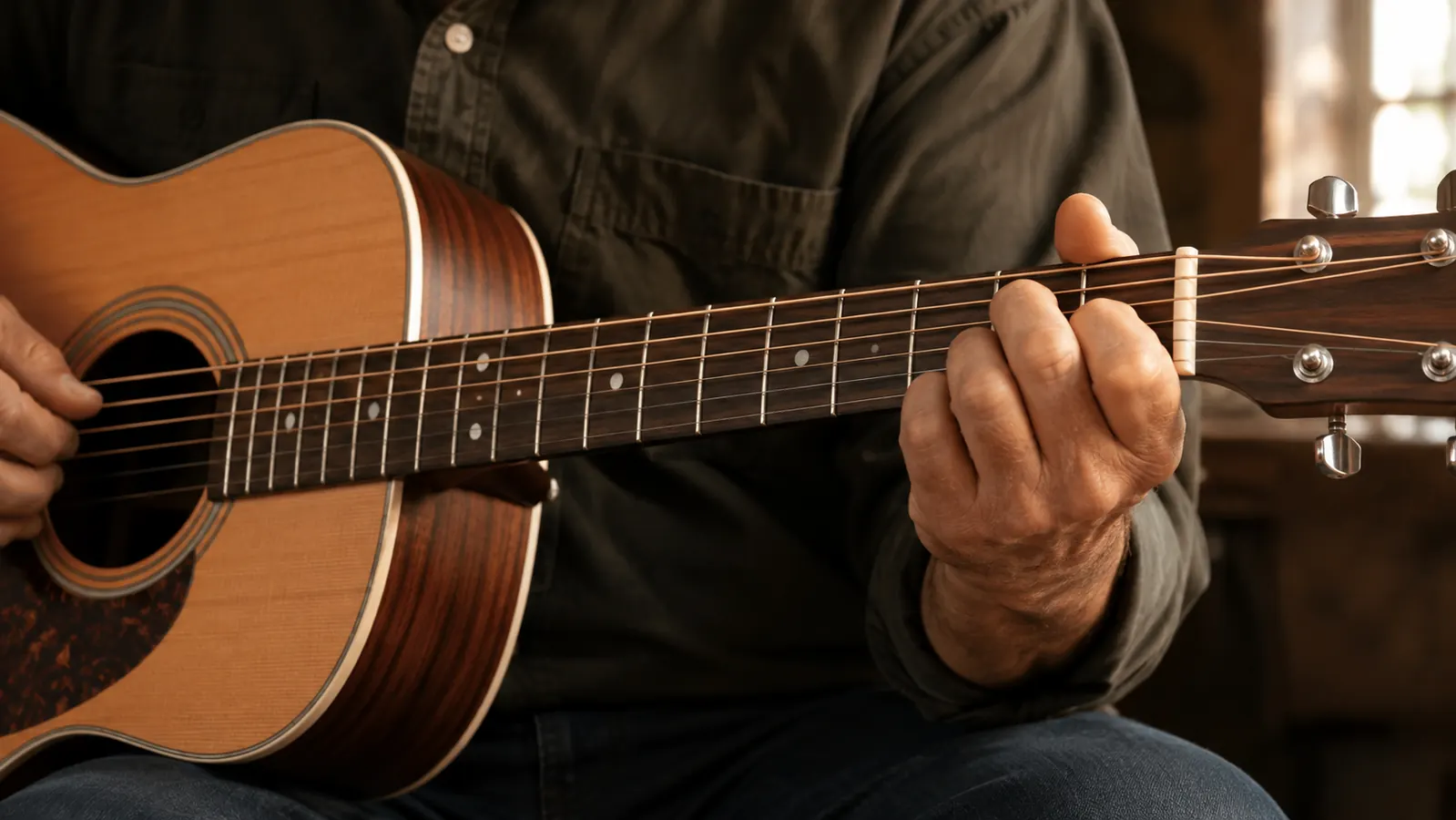
The nut is the small piece at the top of the neck that holds the strings in their grooves, and its width decides how far apart the strings sit. Most steel-string acoustics run from 1.69 to 1.75 inches. The wider the nut, the farther the strings spread, and the harder a kid with small hands has to stretch for a C or a G chord. I watch parents in the store ask about finish colors while the thing that will decide whether their kid keeps playing sits right there under their thumb. Check the nut first, before the color, before the brand decal, before anything.
This is where the CD-60S earns its keep in my studio. It sits at 1.69 inches, the same spec as the other student favorites on my wall, and the neck tapers smoothly as it climbs the fretboard. If a guitar at that width is too much for the player, no amount of setup in the world fixes it. But if the first position feels comfortable, every other issue on this list is something a repair bench can solve.
Step 3: Check the String Height at the 12th Fret
String height, what players call the action, is the distance between the strings and the fretboard. High action is the number one reason beginners quit. They press hard enough to hurt, the chords sound sharp because the extra pressure bends the strings, and the whole experience feels like a punishing chore instead of music. Low action is not a luxury for expert players. It is the difference between a kid who practices every day and a kid who quietly stops after two weeks.
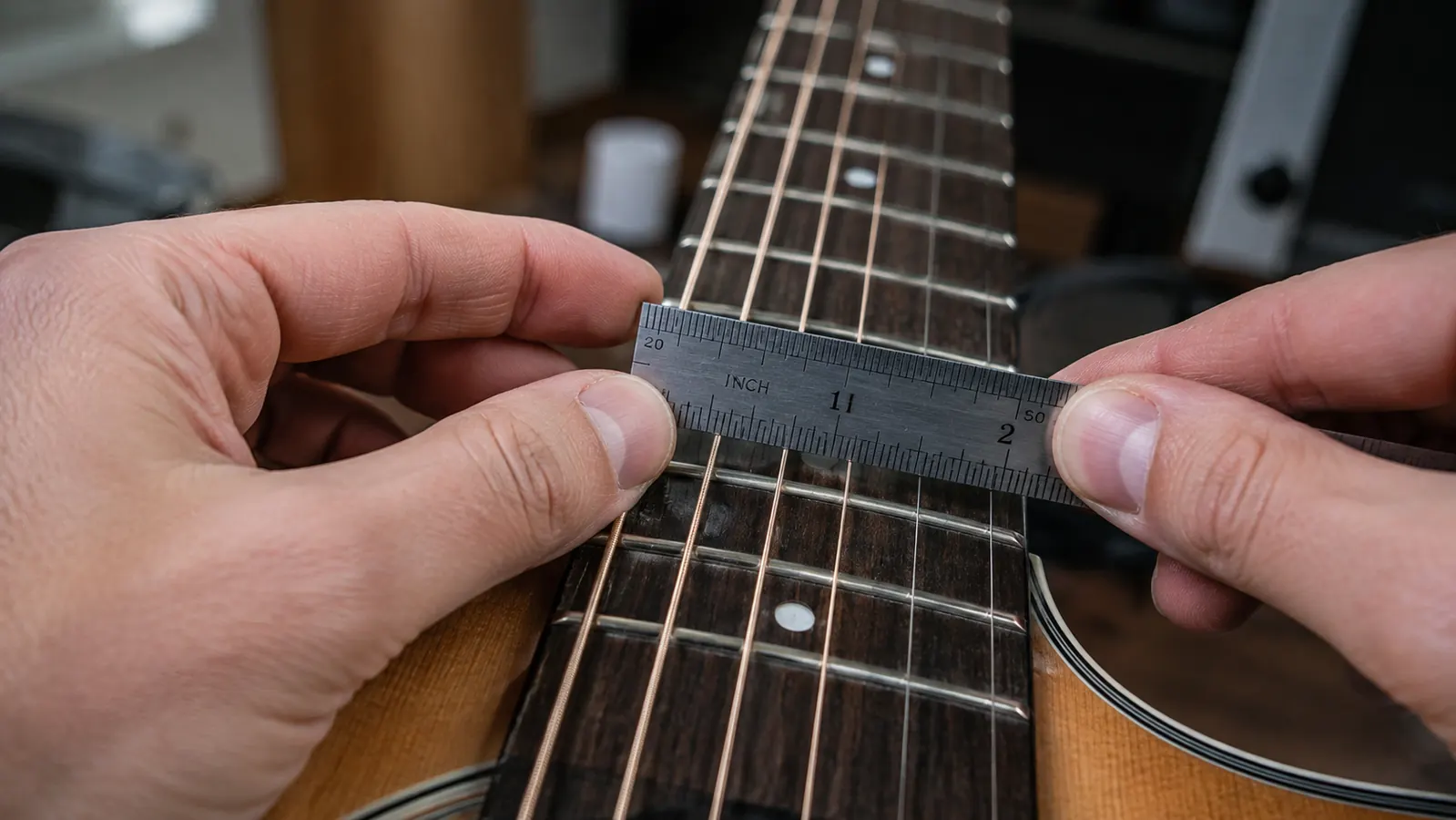
Here is the test I run on every guitar I buy. Hold the low E string down at the 12th fret, then measure the gap between the string and the top of that fret wire with a small ruler. You want roughly two millimeters on the bass side, about the thickness of a coin. If the gap is a lot wider than that, the action is high and the guitar needs setup work. If strings buzz on every fretted note, the action is too low and the truss rod needs adjusting. Either way, you now know what the price tag was really buying.
Out of the box, the CD-60S ships set up for beginners, which is not something I can say about most guitars in its lane. The three I keep on my rack all sat around that two millimeter mark on first inspection, with no buzzing that needed correction. In all my years teaching on them, it has been the least setup dependent student guitar I have stocked, and that is a big part of why it keeps passing my ten-point test.
The number one reason a first guitar ends up in a closet is not a lack of talent. It is strings sitting too high off the fretboard.
Step 4: Turn the Tuning Pegs and See How the Neck Feels
A beginner tunes with a tuner, not with their ear, which means they live and die by the tuning pegs. If the pegs are loose or gritty, the guitar will not stay in tune for one practice session, and the student will decide they are bad at playing when the real problem is poor hardware. Turn every peg. It should move smoothly with gentle resistance and hold its position when you let go. A peg that slips back is a peg that guarantees a frustrating week.
The CD-60S uses sealed die-cast tuners, the same style Fender fits on guitars far up its own lineup, and they hold. In the months of daily lessons I have taught on the three I keep, none of them has drifted badly enough to wreck a student's tuning mid-song. While you are up there, sight down the neck from the headstock. It should run straight with a hint of relief, not bow like an archer's bow. Then run your hand down the back of the neck. A satin finish that does not grab your palm feels dramatically better in the middle of a forty-minute lesson than any spec sheet could suggest. It is the small details, a neck that does not grab and tuners that do not slip, that separate the guitar a student reaches for from the one that gathers dust in the corner.
Step 5: Look for a Solid Top and Leave Room for the Little Things
The top is the voice of the guitar. A solid top, cut from real tonewood, resonates and grows louder and richer the more it is played. A laminated top is cheaper to build, looks fine in the photos, and sounds about the same on day one as it does on day two hundred. For a first guitar, the top wood is where your money belongs. If you want the longer version of the argument, my piece on why a solid top matters walks through it in detail.
The all-mahogany CD-60S carries a solid mahogany top with mahogany back and sides, a combination that is unusual at this price point. Solid tops usually start noticeably higher because real tonewood costs more to source, yet Fender prices the CD-60S well under many comparable student guitars. Check today's price on Amazon to see the current listing. Fender gets the cost down by keeping the rest of the build simple, and simple is exactly what a first guitar should be. There is no electronics to fail, no cutaway to pay for, just a well built six string.
The last thing I tell every parent is to hold back a little money for the extras that actually keep a beginner going: a good tuner, a strap, and a fresh set of strings. A shop setup is worth paying for on most budget guitars, but on a CD-60S it is rarely the first thing needed. And if you are torn between this guitar and the other student favorite, my Fender CD-60S vs the Yamaha FG800 comparison lays out the differences honestly.
What Else Helps Keep a Beginner Playing
A few cheap additions make more difference than a pricier guitar. A clip-on tuner means tuning takes fifteen seconds instead of a struggle at the start of every practice. A strap takes the weight off the fretting arm before it cramps. A stand keeps the guitar out of its case and in the room where practice happens, and an instrument that stays in sight gets played far more than one that stays in a bag. In the first year these little things matter more than the difference between two decent guitars. I tell parents the same thing every September: make the guitar easy to pick up, and the motivation takes care of itself. The student who can grab a tuner and tune up in seconds plays through the first frustration. The one who has to hunt for gear, find a chair, and clear a corner of the room sits down, gives up, and decides the instrument is boring.
And if you live somewhere with dry winters or reliable heating, add a cheap humidifier you clip inside the case and keep the guitar out of direct sun. On a solid-top instrument like the CD-60S, that is not paranoia. A dried-out top is the most common crack I see on ten-year-old guitars, and protecting the part you actually paid for is common sense.
What Is the One Thing Parents Get Wrong About First Guitars?
They treat the first guitar like a lifelong commitment. It is not. The first guitar is the guitar that makes a kid want a second one. So buy the guitar that plays easiest inside your budget, not the one that looks most impressive on the wall, and do not spend so much that the whole experiment feels heavy if it does not stick. You are buying a door into music, not a museum piece, and a door that opens easily beats a door with a nicer handle.
I have had parents apologize to me because their kid just did not have the knack. In almost every one of those cases, the kid had been fighting a guitar that fought back for months. Give a beginner an instrument that does not hurt to hold, and you would be surprised how often the talent shows up on its own. The CD-60S makes that bet an easy one to take, and if it does not stick you have not wrecked the budget trying.
Start With a Guitar That Plays Easy
The Fender CD-60S is the first guitar I hand to new students because it plays easy out of the box and holds up through years of lessons. Check today's price and see whether it fits your first-guitar budget.
Amazon Check Today's Price on Amazon →