
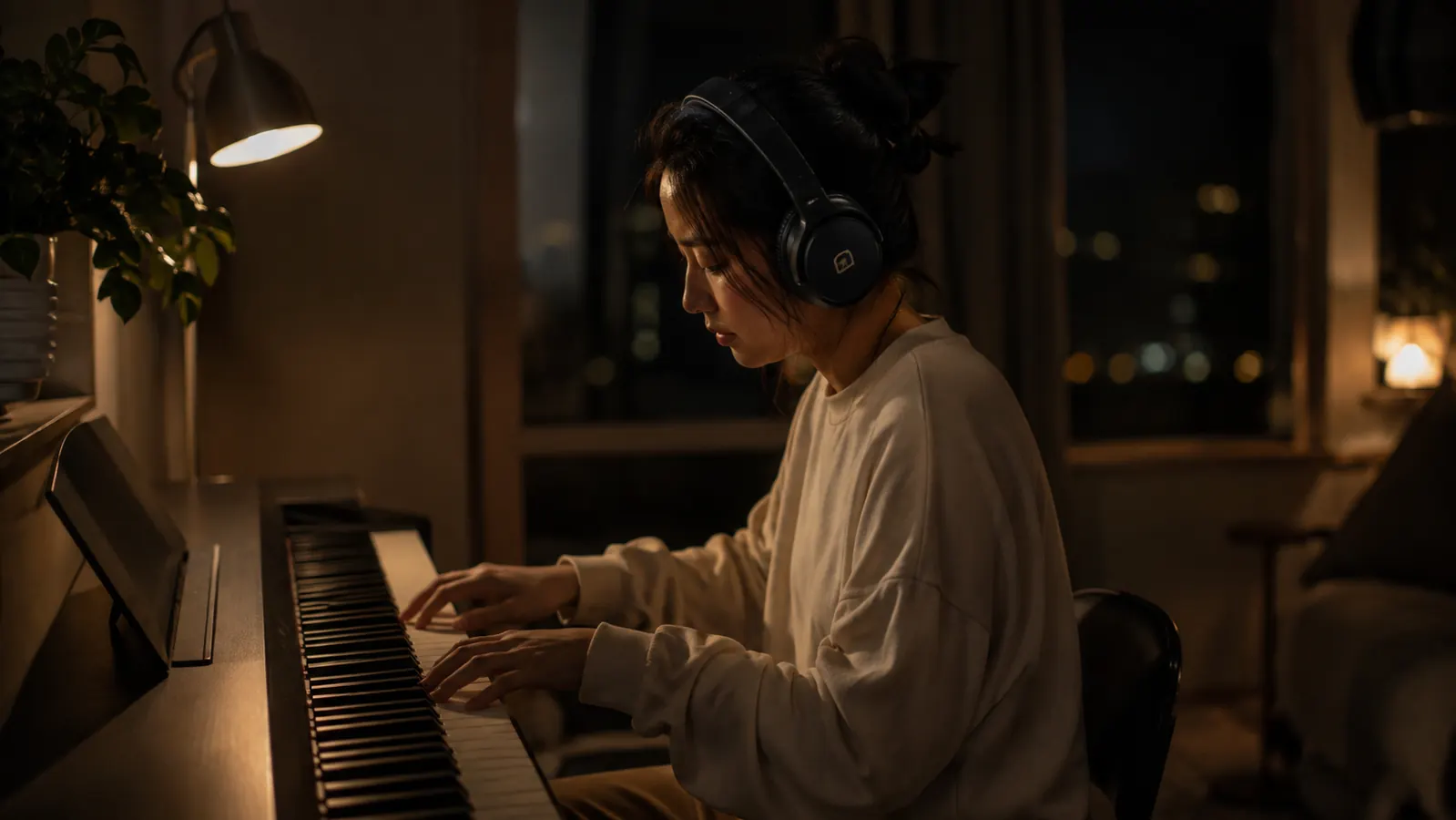
The most common reason a student stops practicing is not laziness. It is that they feel like they are not allowed to practice. They live in an apartment with thin walls, or there is a baby asleep down the hall, or their partner works nights, and the only free hour they get is exactly the hour the rest of the house is quiet. So they sit at a digital piano with the volume at two, tap out an acoustic with a dampening hand over the strings, and eventually they quit because it sounds dead and they can hear the television through the wall.
For years I have been building silent practice setups for students, and the most important piece is rarely what they expect. It is not a pricey audio interface or an acoustic silent system. It is a decent pair of closed-back monitor headphones. One pair of Audio-Technica ATH-M20x cans turned one student's unused keyboard into something she played for an hour every night at midnight, and she improved faster than any of her classmates who had all day. This is the exact rig I teach, step by step.
Before we start, a word about the wrong detour. When people realize they cannot play out loud, their first instinct is to soundproof: foam panels, heavy blankets, closing the door and praying. I have hung a lot of foam in my time, and soundproofing a room so a piano is inaudible next door is a construction project, not a purchase. The headphones route skips the construction entirely. You do not make the room quieter. You move the sound from the room into your ears, which is a hardware problem with a cheap answer.
Closed-back headphones are the quiet-practice upgrade that costs the least
The ATH-M20x is the pair I recommend to most students who need a silent practice rig. It is closed-back, comfortable for an hour-plus sitting, and priced to make sense for a first setup.
Amazon Check Today's Price on Amazon →Step 1: Take Stock of the Headphone Jacks You Already Own
Before you buy anything, look at what is already in the practice spot. Most gear has a headphone output hiding somewhere. Nearly every digital piano and keyboard sold in the last fifteen years has a phones jack, usually on the back edge or underneath. Guitar and bass amps carry one as a matter of course. Audio interfaces obviously do. Drum modules do. Even a few acoustic guitars with built-in preamps have one.
So walk around the house and make a list. Check the back edge of the keyboard for a small jack marked phones. Look under the amp's control panel. If the opening is a small one-eighth inch jack, you will need a quarter-inch to eighth-inch adapter, and if it is a quarter-inch jack you need the reverse. The ATH-M20x cable ends in the small plug and ships with a screw-on adapter that fits the bigger jack, so one pair covers both worlds without extra adapters in the drawer.
The honest answer for almost every student I have walked through this is that they already own eighty percent of the rig. The missing piece is headphones that make the quiet practice sound good enough to keep doing. If your only jack is on a tablet or phone, read on to step four and we will route you through an interface, which adds recording on the same trip.
Step 2: Choose Closed-Back Headphones, Not Earbuds or Gaming Cans
Here is the part most people get backwards. The goal is not a pair that keeps outside noise out, though that helps. The goal is a pair that keeps your instrument's sound in. Open-back headphones leak sound through the back of the cup, which means what you play leaks into the room and what is in the room leaks into your practice. Closed-back cups seal the sound against your ears, so at two in the morning you can play at a real practice volume and the sound stays between your ears. That is the whole trick.
The Audio-Technica ATH-M20x has been my recommended starter monitor for years and it does the quiet practice job exactly. The closed cups isolate well enough for a sleeping house, the tuning is honest rather than flattering, and the weight and clamp are easy to wear through a full practice session. My students complain about their instrument, their chair, and the room temperature. Nobody has complained about these cans on their head. It is also fine for recording into an interface later, which is why it is a monitor and not just a listening headphone.
The tradeoff I tell people honestly: the M20x is not the flattest monitor in the line, the M30x and up get closer to a purely neutral response. For quiet practice, that honesty is more than good enough, and it will not flatter your playing the way consumer headphones do. You want to hear your actual tone, not the one the firmware flatters. And because flat tuning is the point, one pair pulls double duty: silent practice tonight, mix-checking and lesson recording when you grow into a home studio.
Step 3: Plug Into the Digital Piano or Keyboard
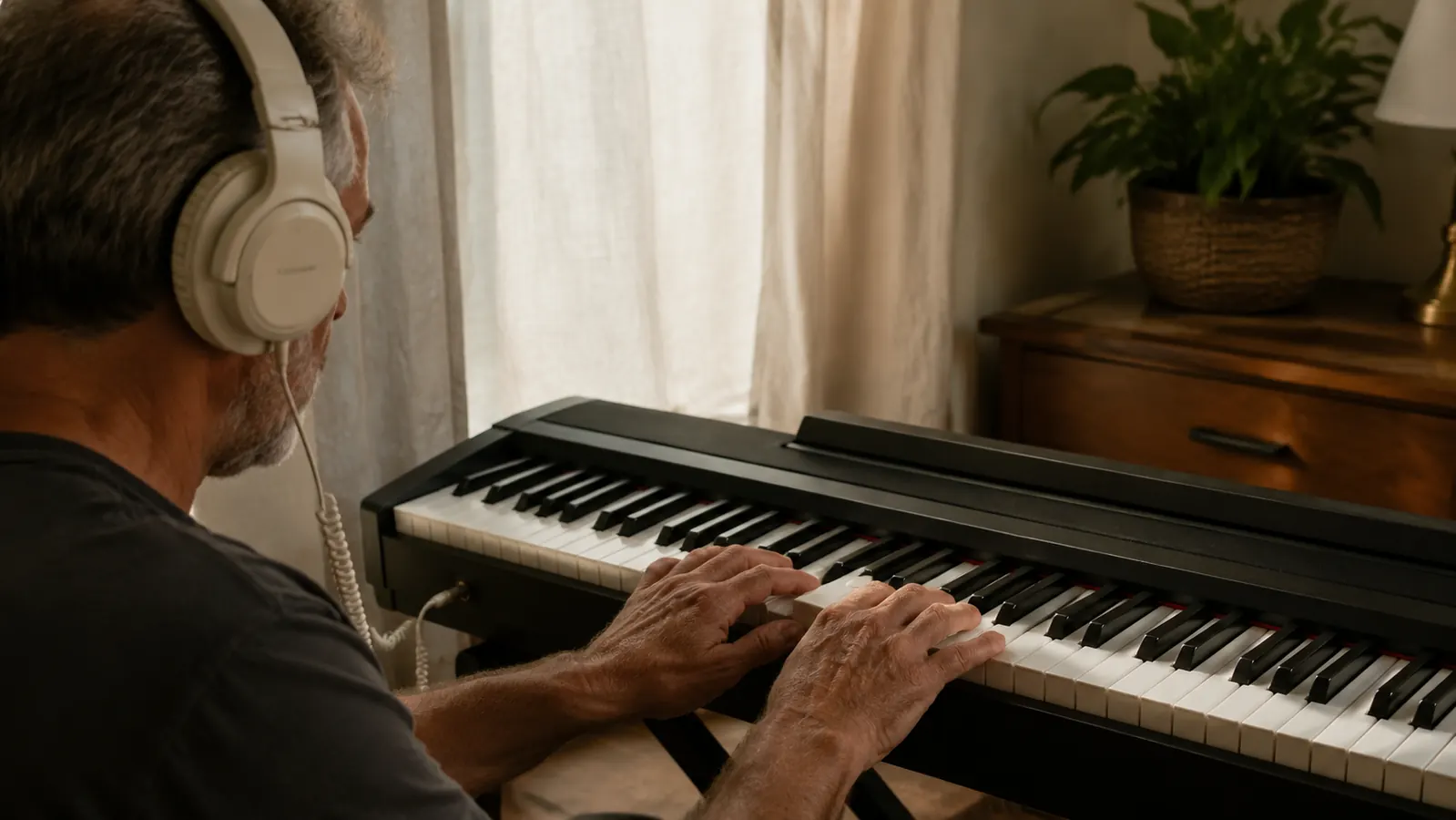
Plugging a good pair of closed cans into a digital piano changes what the instrument sounds like. Built-in speakers at low volume sound thin because they are doing the double job of sounding like a piano while staying quiet enough not to bother anyone. Through headphones, the full sample set reaches your ears at whatever volume you choose, so the action and the sound finally match. A student who only ever practiced at volume two hears their keyboard properly for the first time, and they do not want to stop.
This is the setup I recommend for the widest range of people, because the digital piano is the easiest instrument to practice silently and the most rewarding. The touch stays the same whether or not speakers are on, so nothing about your technique changes when the room is silent. The same is not true of an acoustic guitar muted by hand, where you lose all feel. Keys through cans feel exactly like keys at full volume, which is why keys are where most of my students start their quiet practice.
One discipline matters here. Set the piano volume once, at a level that is comfortable through the headphones, and then resist the quiet creep. Every session the volume has a tendency to climb a notch. Mark the level the first time, return to it each night, and your neighbors never learn that you practice at all.
One more tip for anyone learning keys, young or old: headphone practice is the best environment there is for listening to your own balance. When the left hand drowns the melody or the sustain pedal smears every phrase, you hear it in the cans far sooner than you would through speakers. Teach your ears to hear the two hands as separate voices and your dynamics improve faster than any teacher could nudge them, because the feedback arrives the moment you play the note.
Step 4: Build a Silent Guitar and Bass Rig
Electric players have the easiest path. Most amps made in the last decade sound perfectly good through their own headphone output, because the speaker simulation is built in. Plug the M20x straight into the amp, dial a tone that sounds right in the cans, and the heavy metal lives entirely in your ears while the room stays silent.
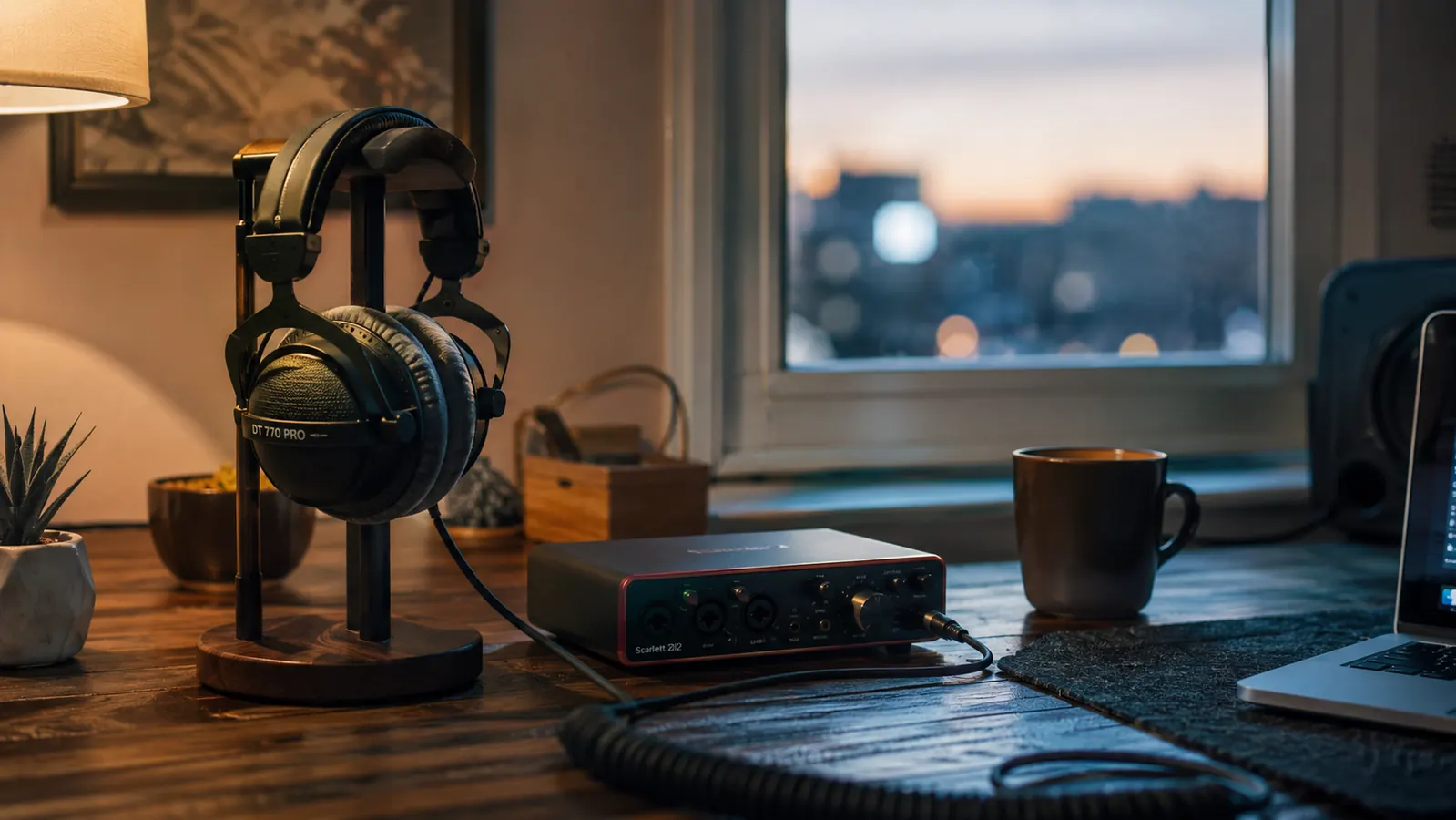
If the amp has no headphone out, or you want recording later, a small audio interface closes the loop. Guitar into interface, interface into the computer, a free amp sim on the screen, headphones out of the interface. That rig also works for an acoustic with a pickup, and it doubles as the recording setup for weekly listening-back sessions. Bass players get the same deal, and a drum machine or a metronome app running through the same headphones keeps time without a single knock heard by the household.
There is one quality-of-life trick worth stealing: build a practice patch that sounds good on its own, with a little reverb and a touch of delay, and save it. Silent practice exposes your bare signal, which is great for building tone but exhausting for a casual twenty minutes. A forgiving patch means you spend the session playing, not judging.
Step 5: Turn It Into a Routine You Will Actually Keep
A silent rig is only worth what it gets used. The students who succeed with quiet practice do not set a grand goal. They set a timer. Twenty minutes, headphones on, no phone nearby, play through two or three things they are working on. When the timer goes, they stop guilt-free. The ritual is easier to repeat when the instrument is already set up with the cable plugged and the chair in place, so leave the rig assembled between sessions.
This is also the answer for parents. A child who practices at seven in the evening in the same room where the family watches television will fight you. Give that child a keyboard in a bedroom corner, headphones on, and the practice becomes private and a little grown-up, which is exactly the motivation a middle-schooler responds to. I have more than one family whose living room stays quiet while the practicing happens two rooms away.
Use the quiet hour for the things that improve fastest: scales, rhythm work, and once a week a recording of yourself. Closed-back monitors are honest enough that your own timing problems become obvious within a month. More than one of my students has walked in after six weeks of midnight practice sounding like a different player, and the only thing that changed was that they could finally practice every day.
What Else Helps
Headphones carry the setup, but a few cheap additions make it smoother. For acoustic guitar, a soft practice mute strapped over the strings drops the volume dramatically without changing your hand position. Drummers get the same effect from practice pads and silent cymbals, and the M20x seals the remaining clicks well enough for a late session. Acoustic piano players can use the middle pedal's practice rail where the instrument has one, or a felt strip across the strings.
And a two-dollar extension cable solves the one real annoyance of headphone practice, which is being chained to the instrument when you want to stand up and think. A coiled extension frees you to move around the room with the sound still in your ears, which matters more than it sounds. The freedom to stand, stretch, and pace while a passage plays in your head is quietly one of the best reasons to practice with headphones at all.
Closed-back headphones did more for my night-shift students than any amount of acoustic foam. Foam treats the symptom. A pair of good cans fixes the room.
The One Thing to Buy Tonight
If you take nothing else from this guide, take this: check the headphone jack on the gear you already own, plug in a closed-back pair, and practice at a real volume after dark for one week. You will play more in that week than in the previous month, because practicing quietly stopped feeling like a compromise. The Audio-Technica ATH-M20x is the pair I keep on the studio shelf for exactly this, and it is the first thing I recommend to every student stuck practicing around a sleeping house.
And buy the headphones before anything else. A pricey interface does you no good if the pair you plug into it is thin earbuds. Start with the cans, plug into the jack you already own tonight, and build the rest of the rig when the quiet hour becomes a habit you cannot break.
Start tonight with a pair you will use for years
You do not need a studio to practice quietly. Headphones are the entire secret. The ATH-M20x is the pair I keep recommending, and the price on Amazon changes, so check today's price before you order.
Amazon Check Today's Price on Amazon →