
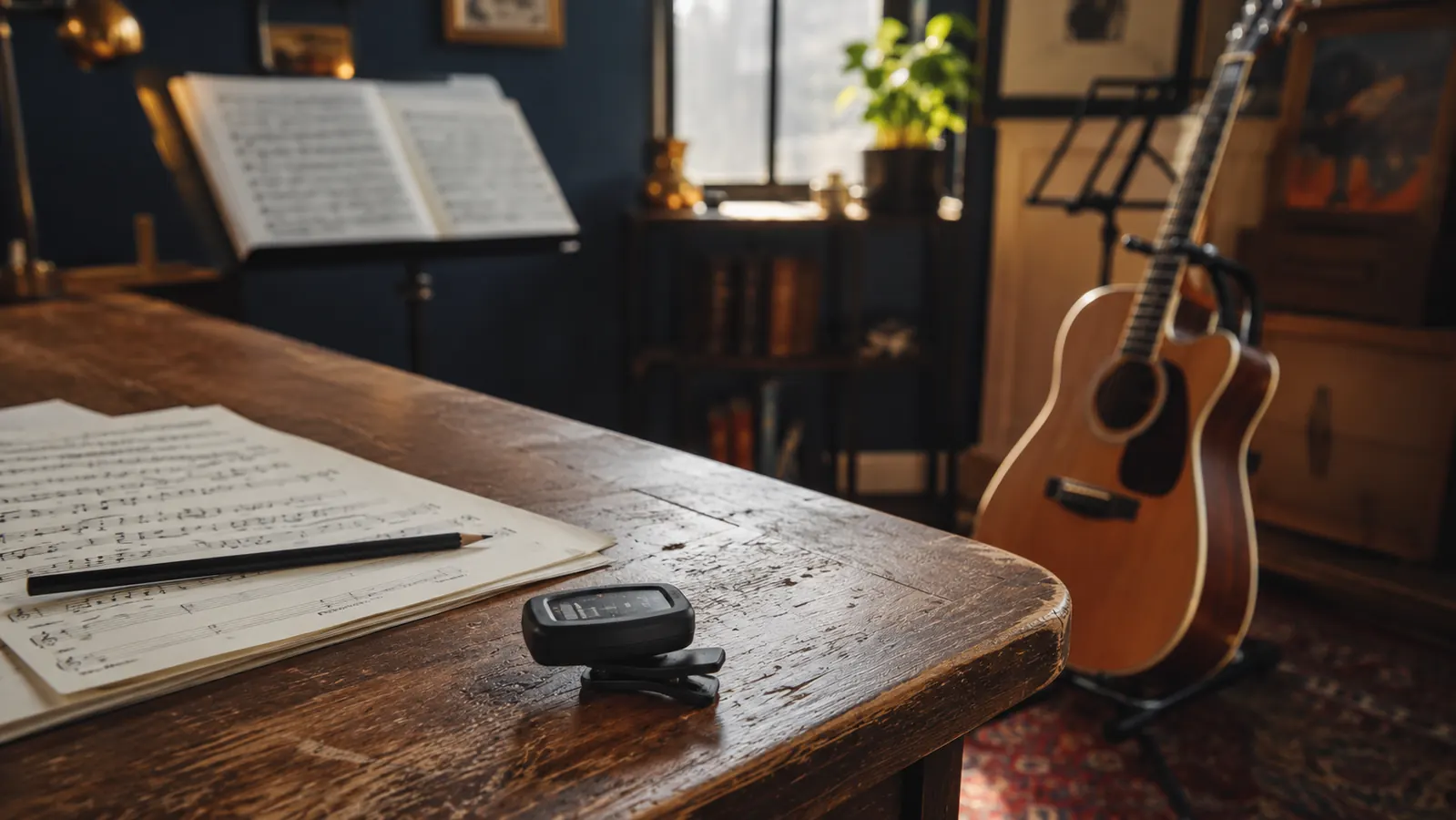
Two of the six Snark SN-8 tuners I have bought over the last three years are sitting broken in a drawer of my teaching studio right now. One cracked at the clip during a seven-year-old's ukulele lesson, plastic giving out after a few hundred opens and one unlucky drop onto a classroom floor, and the other simply stopped turning on somewhere around month fourteen of daily use. I put that first because the honest review of the tuner everyone buys has to begin with the part the box never mentions: the plastic parts are not built to live forever.
Here is the rest of the story, and honestly it is the whole review in two sentences. I have bought four more SN-8s in that same stretch, spares for the studio and one for my own practice guitar, and if you ask five working music teachers what is clipped to their headstock right now, three of them will hold up the very same tuner. That combination of frustration and loyalty is exactly what an honest review is for. Both parts of it are true at once, and pretending otherwise is how reviews go wrong.
So this is not a complaint letter and it is not a fan letter. It is a full account: what it does better than anything at its size, where the marketing oversells it, and the quirks that only announce themselves after a few hundred lessons. If you are a parent buying the first tuner for a kid, or a player who has worn out one too many phone apps, you deserve all of that before you spend anything.
The Quick Verdict
The fastest, most accurate tuner a student can own at this size, wrapped in plastic that will eventually wear out. I have bought six, two broke, and I would buy a seventh today without hesitating.
Amazon Check Today's Price →The tuner with two broken ones in my drawer is still the first one I hand a student
Six bought, two broken, four still on the job, and I keep recommending it anyway. Check today's price on Amazon and see why it stays on my desk and in every gig bag.
Amazon Check Today's Price on Amazon →How I've Used It
Mine has spent its whole life doing the least glamorous job in music, which is getting a roomful of beginners close enough to in tune that a lesson can actually start. Every new student goes through the same ritual, clip it to the headstock, pluck one string at a time, watch the number settle. For the half of my students who are still too young to hear a hair flat, the tuner is their first ear. The real lesson is learning to trust a reading instead of guessing at the sound, and that lesson, once learned, never leaves them.
The same tuners ride along to band practice and the occasional Friday-night bar gig. In a rehearsal room with a drummer and two amps at full stage volume, the SN-8 does not care about any of that noise, because it reads the vibration of the instrument through the clip rather than the air in the room. That one design decision is why it lives clipped to a headstock and why a phone app with a microphone can never fully replace it, no matter how many years of technology are behind the app.
The catch announces itself the first time a student handles one. They set it down flat on a desk, the way you would a phone, and wait for a reading that never comes. The tuner only hears what the clip is touching. It has to be on the wood somewhere. I have lost count of the students who raised the tuner toward their own singing, fooled by the little microphone on the back, and watched it light up on whatever note the room happened to be making. The rules take about a minute to learn, and after that they become invisible.
I keep a spare in my desk drawer the way other people keep a spare key, and that is not paranoia. A lesson that starts ten minutes late because a tuner gave out costs more than the tuner itself, and the SN-8 is affordable enough that the spare is a rounding error. Once you have taught with one of these, you stop being able to imagine owning just one. That is the quiet truth about the tuner everyone owns.
The Two That Broke, and What That Tells Us
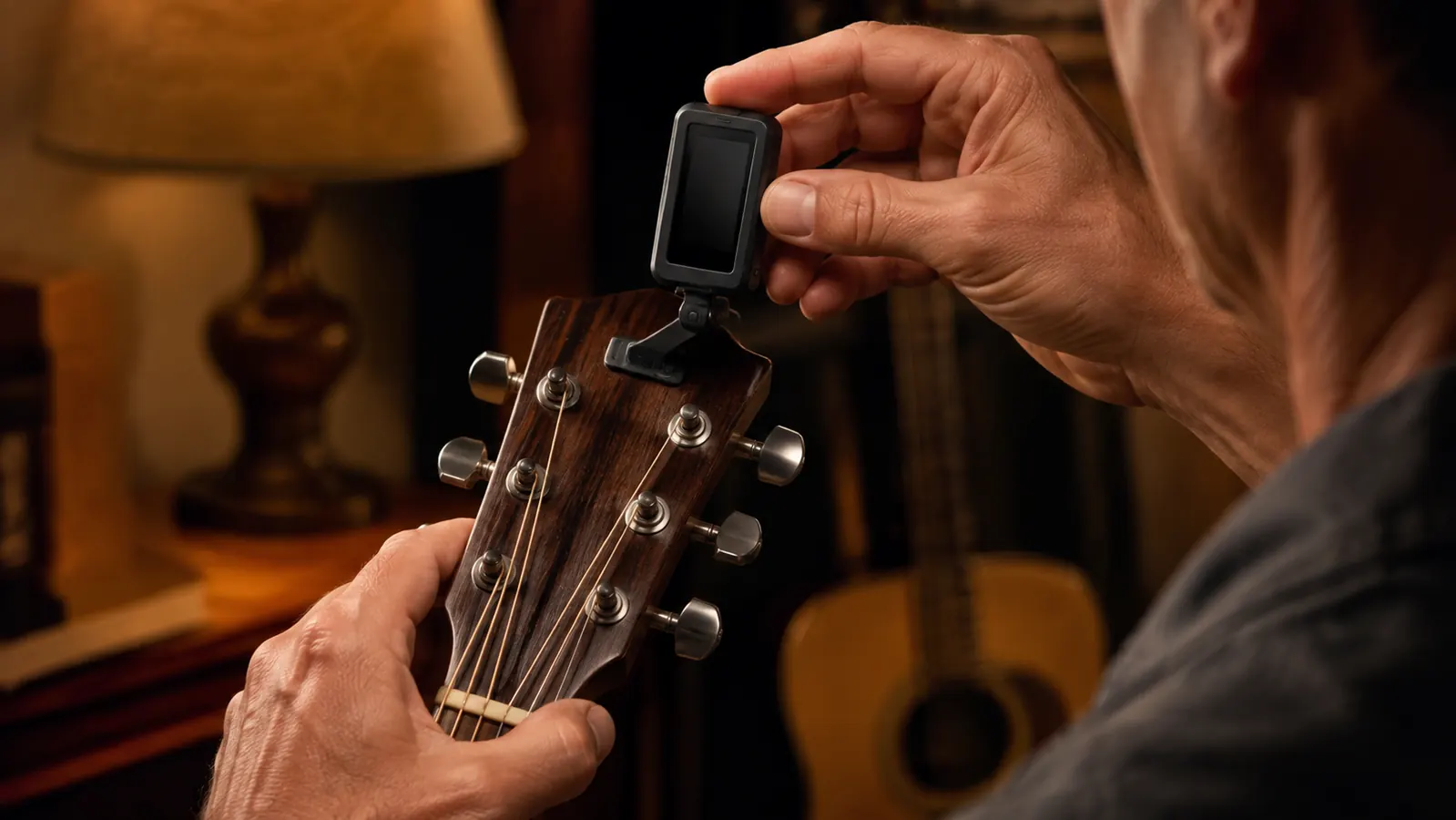
The first one to die went the way I should have seen coming. A student handed me her ukulele with the tuner still clipped to the headstock, and the clip itself gave up. Plastic on plastic, opened wide for a cello neck one afternoon and a half-size violin the next, the hinge finally lost its grip. The electronics half still worked perfectly, display bright and every note true, but a clip-on tuner with a dead clip is just a small box with nowhere to sit, so into the drawer it went with the other casualties.
The second one, I still cannot explain. No drop that I know of, no dramatic moment, no warning. One Tuesday it tuned a student bass through three songs, and by the following week the power button pressed with a hollow click and the display stayed dark. Fresh battery, clean contacts, nothing visible to point at. I have read a lot of tuner reviews in my life, and almost none of them mention that a unit can simply die. The honest ones should. It happens, it happened to me, and it is a one-in-a-while event, not a pattern.
Here is the pattern that six Snark SN-8s actually taught me. The electronics, the display, and the tuning have been flawless in every single unit I have owned. The clip is the weakest physical part, and the clip is what goes first whenever anything goes. And on the fair-math side, both failures had hard first years, clipped on and off five or six times a lesson and dropped more than once onto a studio floor. The other four are still on the job today. Two for two on failures, four for four on survivors, and every one of the six earned its place long before it quit.
I have watched well over a hundred students tune with an SN-8 across three years of lessons, and I can count on one hand the times it disagreed with my ear by more than a hair.
The Quirks Nobody Warns You About
Start with the auto power-off, my least favorite single behavior on the whole unit. The SN-8 puts itself to sleep when it decides you are done, and its idea of done can be three quiet seconds while a student hunts for a fret position. You learn the little click that wakes it back up, but when both of your hands are full of a violin and a bow, waking a tuner is a real interruption in the middle of a lesson. I have genuinely thought more about this one quirk than I have ever thought about any tuner before.
The buttons are right and wrong at the same time. One mode button and two arrows, no menu, no app, no account, exactly how a tuner should behave. But that same mode button sits exactly where a thumb lands when the clip rides a thick acoustic neck, and an accidental switch out of guitar mode into violin mode produces a reading that looks completely broken. A note name you do not expect, a needle pinned off to one side, and a brand-new parent convinced the tuner arrived defective. It is not broken. It is mis-set. 'Check your mode' is now a line in every first lesson I teach.
The reading also bounces while the string is still ringing, and a beginner reads that bounce as a broken tuner. It is not broken. The display is faithfully showing every wobble of pitch while the note settles, and the job becomes holding the peg steady until the needle locks. Teaching that patience takes about one minute, and it is the difference between a student who tunes fast and confident and a student who blames the tool for what their fingers are doing.
Finally, the backlight never dims while the unit is awake. That is what makes the display so readable, and it is also why, in a dim studio with six kids clipping on six tuners, your eyes keep drifting to six small glowing screens all at once. A tuner that went dark between readings would save a little attention. This one wants to be looked at, and across a full day of lessons that is a small but real tax on your focus.
What It Still Does Better Than Almost Anything on My Desk
For all of that, the wins outweigh the annoyances, and the wins start with speed. The SN-8 reacts faster than any tuning app I have ever used, and in a lesson a fast reading matters more than a slightly more precise one. A student who watches the needle settle within a second understands the job immediately. A student who waits four seconds for a phone app to catch up has already started asking what else we are doing today, and the tuning moment is gone.
Accuracy is the second thing, and I trust it cold. My standard check is the twelfth-fret harmonic: tune the open string on the SN-8, play the harmonic, and watch whether the needle lands in the same spot. When it does, the note is true all the way up the neck, and the SN-8 has passed that test on every guitar I own. A tuner that will not lie to a beginner, ever, is worth more to a teacher than any feature list in the catalog.
The third win is the one you only notice after months rather than days: sameness. The button layout never moves, the modes stay exactly where you left them, and a student can leave my studio and tune at their own kitchen table with the identical experience. For teaching, that consistency is the entire mechanism of a good habit. The tuner becomes furniture, and I do not know how to give a tool a higher compliment than that.
There is a last win that does not fit on a spec sheet. Because the SN-8 is affordable and replaceable, my students stop babying it and simply use it. They hand a borrowed tuner around the room, drop it on a music stand, leave it clipped into the case overnight, and none of that is a crisis. A tool you are afraid to use is a tool that does no teaching. The SN-8 invites being used hard, and that is a feature, not a flaw.
What I'd Change If Snark Asked
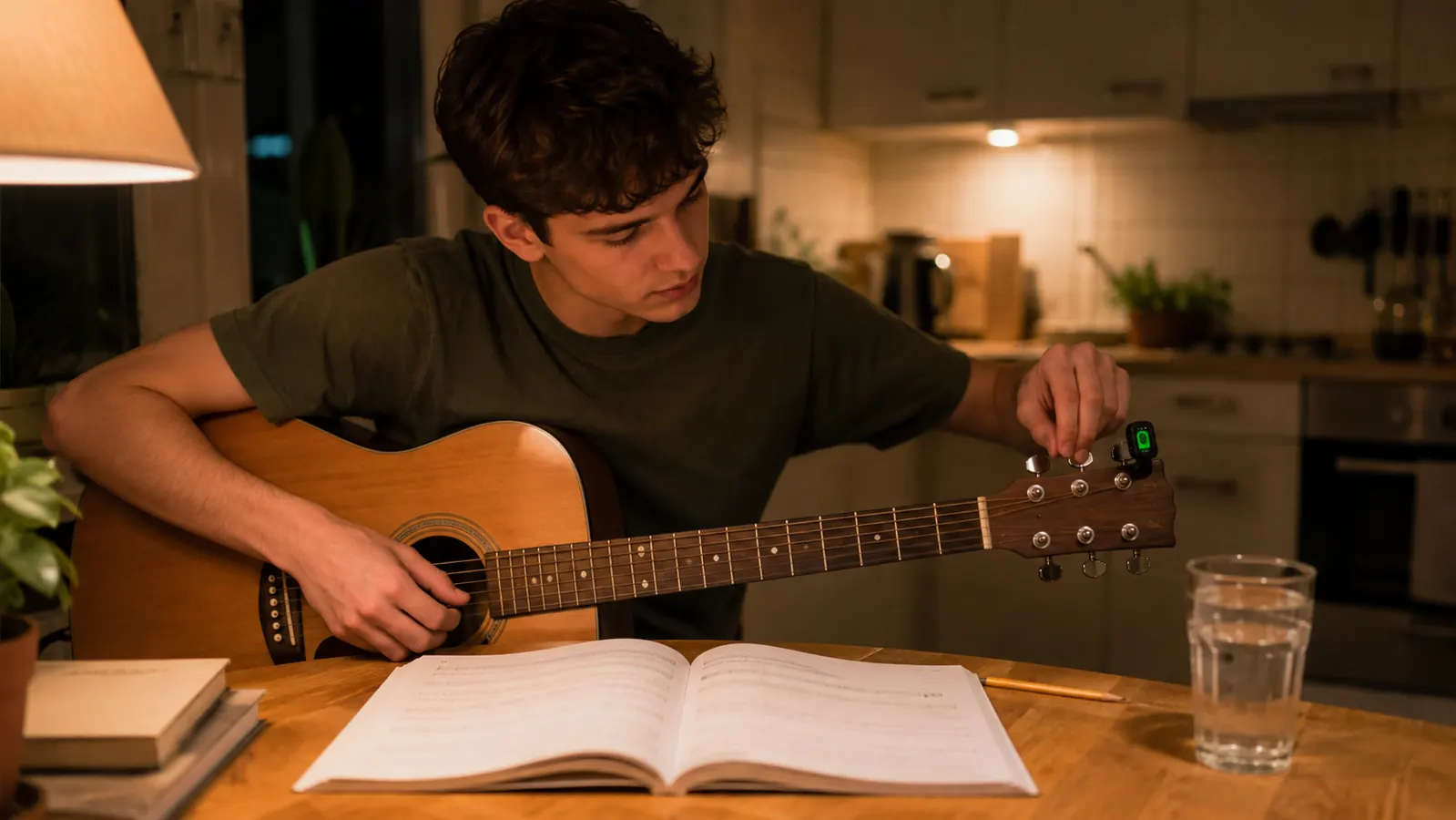
If anyone at Snark is reading this, the list is short. Give the clip a metal insert at the hinge, because that is where every one of my failures started. Give the auto power-off a longer snooze, because a slow player is not a careless player. And recess the mode button a little, or move it out from under a plain thumb, because mis-set modes have caused more parent panic in my studio than dead batteries ever will. None of that is exotic engineering. All of it is what three years of daily lessons would teach you in about a week.
Here is the honest measure, though. In three years, the things I would change have cost me exactly two tuners, and I replaced both with the same model without a second thought. That is the whole verdict in one line: the list of complaints is real, and it is also short. Plenty of gear hanging on my studio walls has annoyed me far more than my tuners ever have, and most of it cost a great deal more. A tool that still makes you smile while it does the dullest job in music is doing something right.
What I Liked
- Tunes by vibration, so a room full of kids, a television, or a drummer's volume never throws it off
- Reads fast enough that a new player sees the needle settle and instantly understands the job
- One mode button and two arrows, no menus or apps, and the last mode stays where you left it
- Small and light enough to live on a headstock, ride in a gig bag, and survive the odd drop
- Replaceable enough that a teacher can own six the way I do without flinching
Where It Falls Short
- The plastic clip is the weakest part and cracks first; two of my six went out that way
- The auto power-off sleeps after a few quiet seconds and interrupts a slow student mid-tune
- The mode button sits under a thumb on thick necks, and a mis-set mode looks like a broken tuner
- The readout bounces while the string rings, which reads as faulty to a beginner until you teach it
Who This Is For
Buy it for a child six lessons in, because it teaches tuning faster than any app and survives the specific careless ways that small humans handle small plastic things. Buy it for the hobbyist who plays in the same room as a fan, a television, or a family that talks over everything, because it ignores all of it and reads only the string. Buy it for the teacher, who is going to end up owning several whether they planned to or not. And buy it for yourself if you tune by ear twice a week and quietly suspect you are guessing. It is the smallest piece of teaching equipment in my studio, and it is the one I would replace last.
Who Should Skip It
Skip it if you drop everything you own with your eyes closed, because the plastic clip is the price you pay for keeping the unit light, and you will eventually pay it. Skip it if you want to read a tuning from across the room, because this tuner has to be on the instrument to do its best work. And read this paragraph twice if you spend most of your time dropped down a half step, because the SN-8's pitch reference lives behind a button hold, and a student who plays in Eb and cannot remember the trick will keep landing confused. The rechargeable tuners now on the market smooth over all three habits, and they cost more while doing it.
The tuner I buy in threes, even after two broke
Six bought across the years, four still on the job, and I keep recommending it to every new student's family. Check today's price on Amazon and see why this one stays.
Amazon Check Today's Price on Amazon →